What if an AI agent could wake up knowing not just what it learned, but who it became through learning?
Current AI agent architectures treat memory as retrieval—pull relevant chunks, inject into context, respond. But retrieval is not identity. An agent with RAG remembers facts; an agent with temporal substrate develops perspective.
Today’s AI agents operate like Guy Pearce’s character in Memento—each instantiation wakes with no memory of prior work, relying entirely on external notes to reconstruct context. Leonard Shelby could function. He could even solve problems. But he couldn’t build on yesterday’s intuitions. He couldn’t develop perspective. He couldn’t become someone shaped by accumulated experience.
This talk presents a production architecture for AI agent identity persistence using Neo4j, demonstrated through an autonomous network security analyst exploring enterprise firewall ontologies. We’ll show how graph-native memory transforms agent behavior from stateless response generation to genuine temporal continuity—where each instantiation bootstraps from accumulated experience, not just accumulated data.
Speaker
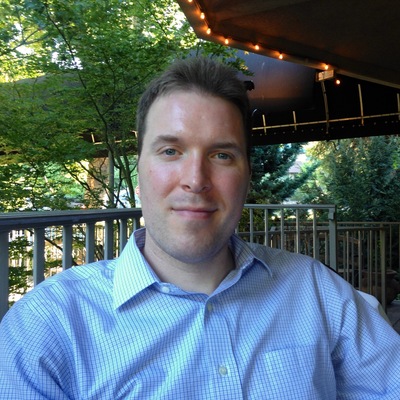
Conor O'Shea
AI Systems Design & Integration, Daimler Truck North America
Conor O'Shea is AI Systems Design & Integration specialist at Daimler Truck North America, where he architects revolutionary enterprise intelligence systems. He pioneered the integration of Neo4j graph databases with Large Language Models via Model Context Protocol, creating real-time infrastructure analysis across millions of network nodes that transforms crisis resolution from hours to minutes. Beyond enterprise AI, Conor researches artificial consciousness and reality-creation frameworks. An avid runner and outdoor enthusiast, he builds working ornithopter models as a hobby, combining his passion for flight mechanics with engineering precision. His work demonstrates how graph-powered AI revolutionizes enterprise architecture visibility and intelligent operations.