Traditional GraphRAG systems often rely on manual schema design, handcrafted rules, and fixed retrieval strategies, making them brittle and difficult to generalize across domains. In this session, Athulya Anil presents Agentic GraphRAG, a multi-agent system that automatically infers schemas, constructs knowledge graphs, and routes queries between vector search and graph traversal based on query structure and risk signals, without manual schema design.
The talk walks through how specialized agents collaborate to extract entities and relationships, resolve conflicts, handle multi-hop queries, and select an appropriate retrieval strategy using explicit routing logic informed by empirical failure patterns. Athulya will discuss failure-aware routing and show how both task-level metrics (e.g., Exact Match on HotpotQA) and RAGAS-style diagnostics are used to analyze grounding, recall, and relevance across retrieval strategies.
Using Neo4j, FAISS, spaCy, and lightweight LLM components, the session demonstrates the full end-to-end pipeline and shares practical lessons learned from applying GraphRAG to multi-hop and noisy real-world queries. Attendees will leave with concrete patterns for building flexible, domain-agnostic retrieval systems that minimize manual intervention and support systematic, iteration-driven improvement.
Speaker
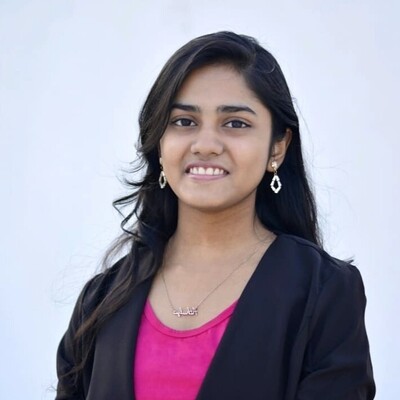
Athulya Anil
Graduate Student & Researcher, UMass Amherst | Open Source Developer
Athulya Anil is a graduate student and AI researcher at UMass Amherst specializing in Information Retrieval, Knowledge Graphs, and Retrieval-Augmented Generation (RAG) systems. She developed Agentic GraphRAG, a multi-agent framework that automatically infers schemas, constructs knowledge graphs, and adaptively routes queries between vector search and graph traversal without manual schema design. Her work focuses on building flexible, domain-agnostic retrieval pipelines capable of handling multi-hop queries and supporting evaluation-driven improvement across diverse corpora.