2 of 3: Why Graphs, Knowledge Graphs, and Context Graphs Matter to Customers

Director, Partner Marketing, Neo4j
3 min read
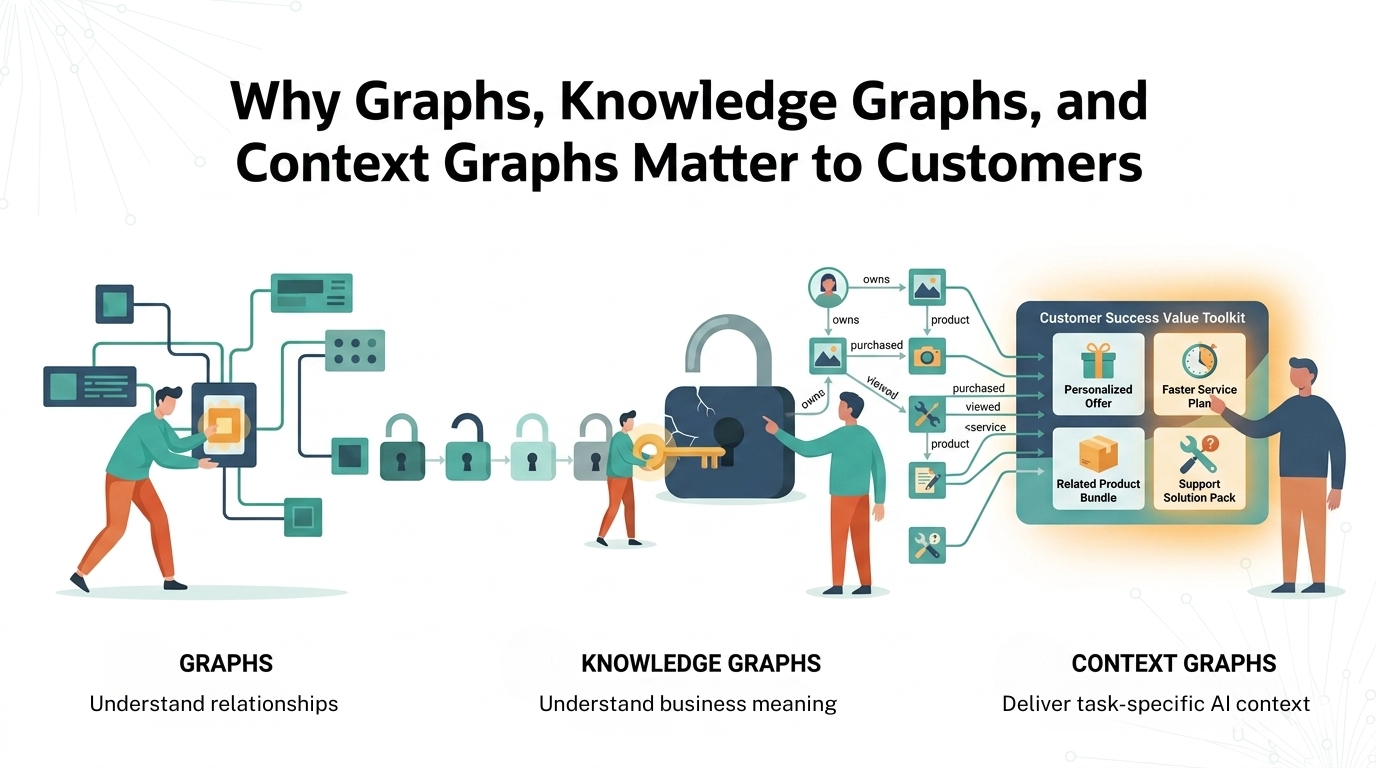
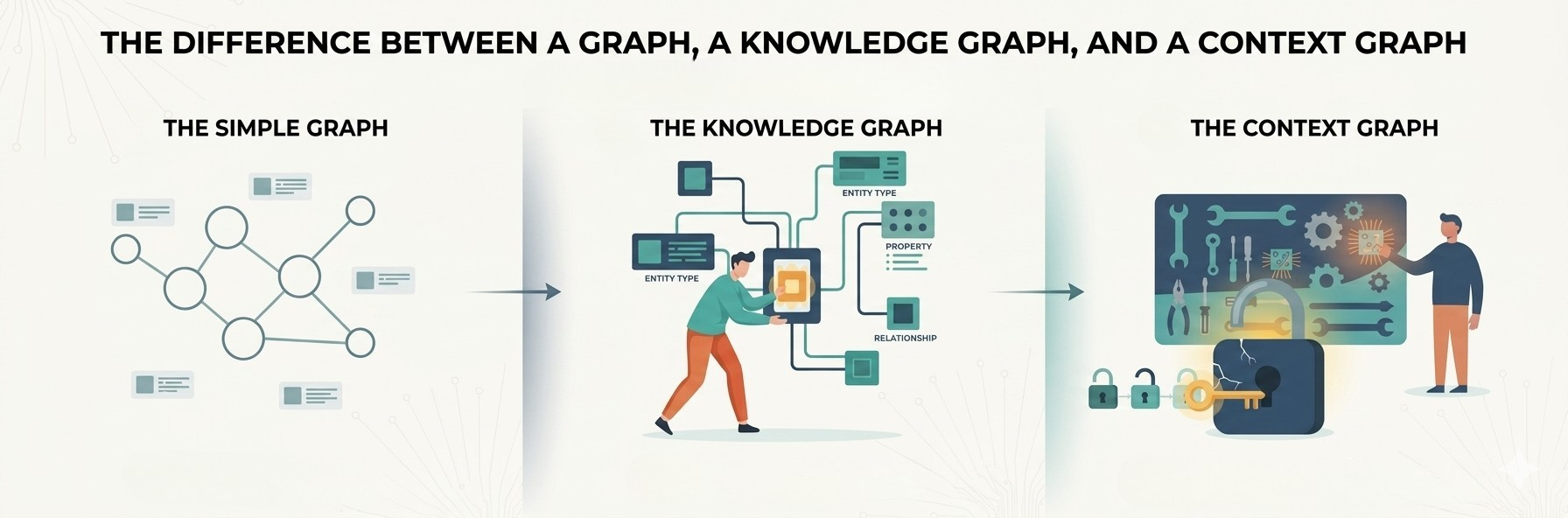
This is part 2 of a three-part series on the evolution from graphs to knowledge graphs to context graphs and why connected data is becoming foundational for enterprise AI. In the first post, I outlined the difference between graphs, knowledge graphs, and context graphs. In this post, I’ll look at why that evolution matters for customers building the next generation of AI-powered applications.
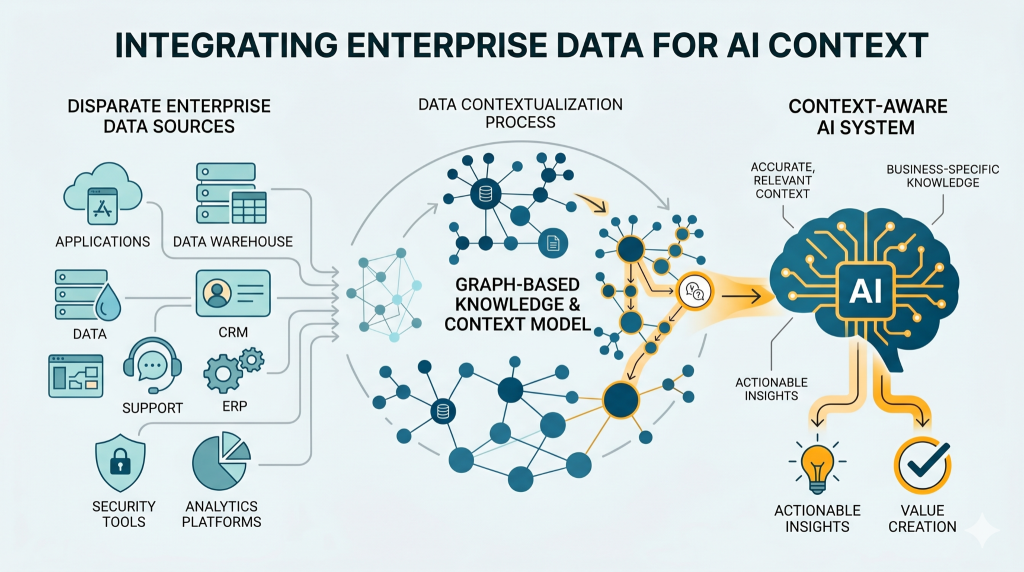
Most organizations are not short on data.
They have data in applications, warehouses, lakehouses, CRM systems, support systems, ERP systems, security tools, and analytics platforms. The challenge is not simply having data. The challenge is understanding how it all fits together.
That challenge becomes even more important with AI.
AI systems need more than access to information. They need accurate, relevant, business-specific context. That is where graphs, knowledge graphs, and context graphs create customer value.
Graphs Help Customers See Relationships
Many high-value business problems are relationship problems.
Fraud detection, recommendations, supply chain risk, customer 360, identity resolution, cybersecurity, and compliance all depend on understanding how people, products, accounts, transactions, systems, and events are connected.
Graphs help customers uncover patterns that are hard to see when data is fragmented or treated as isolated records.
Customer value:
- Find hidden patterns
- Detect risk faster
- Improve recommendations
- Understand customer behavior
- Trace dependencies
- Analyze complex networks
Knowledge Graphs Help Customers Create Shared Understanding
Graphs show relationships. Knowledge graphs help customers understand what those relationships mean.
This matters because enterprise data is often inconsistent. Different systems use different definitions. Teams may not agree on what a customer, product, supplier, policy, or transaction means.
A knowledge graph can help create a connected, business-aware view of the organization.
Customer value:
- Create a common understanding across teams and systems
- Improve search and discovery
- Support governance and compliance
- Connect data silos
- Ground AI responses in business meaning
- Make enterprise knowledge reusable
AI changes the data conversation because it changes how information gets used.
In traditional analytics, people often interpret reports, dashboards, or search results before deciding what to do next. With generative AI and agents, the system may summarize information, recommend an action, or trigger a workflow on behalf of a user.
As a result, incomplete or disconnected context can have a bigger impact. It may lead to an inaccurate answer, a poor recommendation, a missed risk signal, or an action taken without the full business picture.
Context graphs help close that gap by bringing together the relevant knowledge, relationships, history, permissions, and current state needed for a specific question, workflow, or decision. They help AI move beyond plausible responses toward grounded, business-aware outcomes.
For AI agents, this becomes even more important. Agents need to understand tasks, workflows, prior actions, customer history, business rules, and available tools. They need memory and context, not just prompts.
Customer value:
- Improve AI accuracy and relevance
- Reduce hallucinations
- Personalize responses
- Support agentic workflows
- Improve explainability
- Help AI systems reason across relationships
- Move AI from experimentation to production
The Progression Customers Are On
| Customer Need | Graph Evolution | Simple Definition | Helps Answer |
| Understand relationships | → Graph | Connects entities and relationships | → What is connected? |
| Understand business meaning | → Knowledge Graph | Adds meaning and business context | → What do the connections mean? |
| Deliver task-specific AI context | → Context Graph | Delivers relevant context for a task, decision, or AI system | → What matters right now? |
Coming up
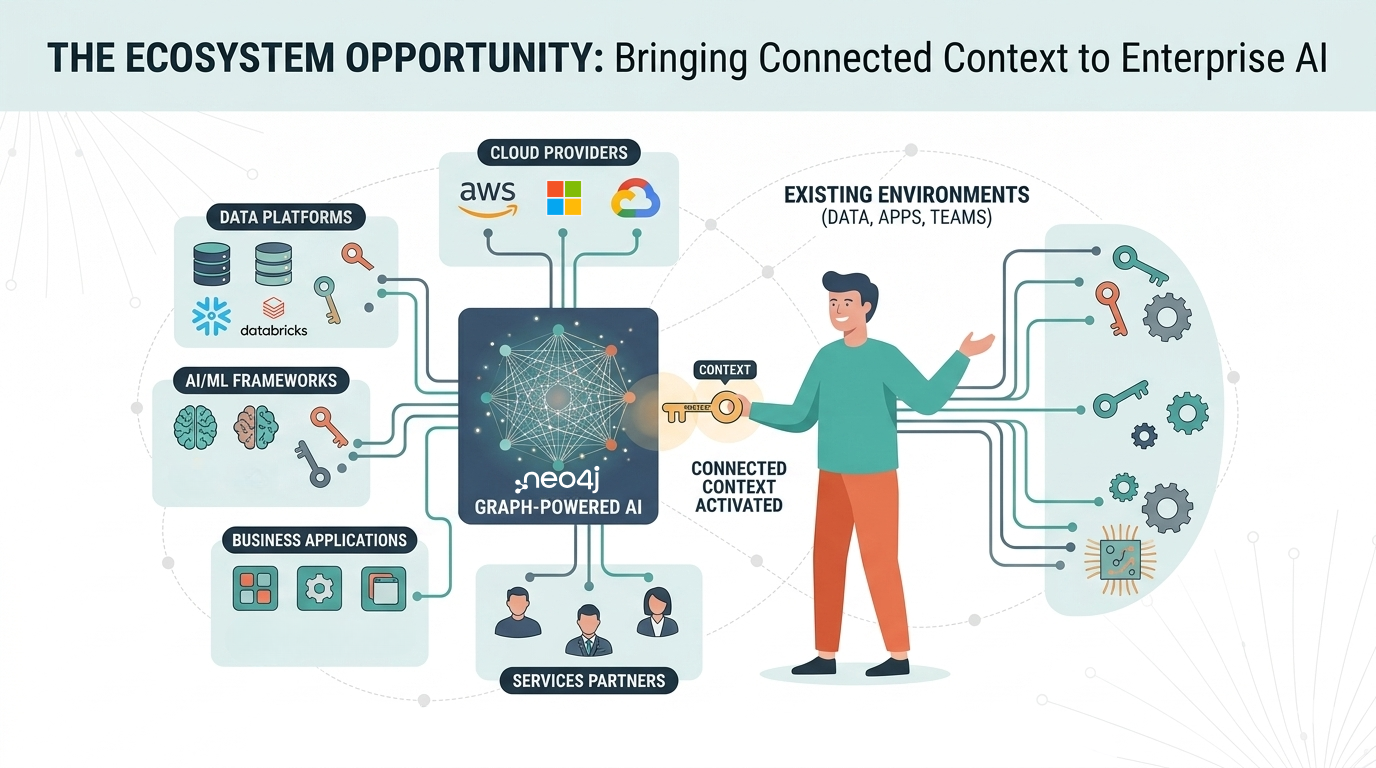
The value graph provides in making AI more effective and powerful is clear. But building an AI system doesn’t happen overnight, and enterprises rarely build AI on their own. They are working across cloud providers, data platforms, AI services, consulting partners, and marketplaces.
In the next post, I’ll explore why the ecosystem matters, and why the next wave of AI will depend not just on better models, but on the connected platforms, partners, and integrations that bring enterprise context to life.
Share Article


Explore
Related Articles
1 of 3: The Difference Between a Graph, a Knowledge Graph, and a Context Graph