
How Graph Intelligence Drives Breakthroughs in Science and Society

CMO (Interim)
5 min read
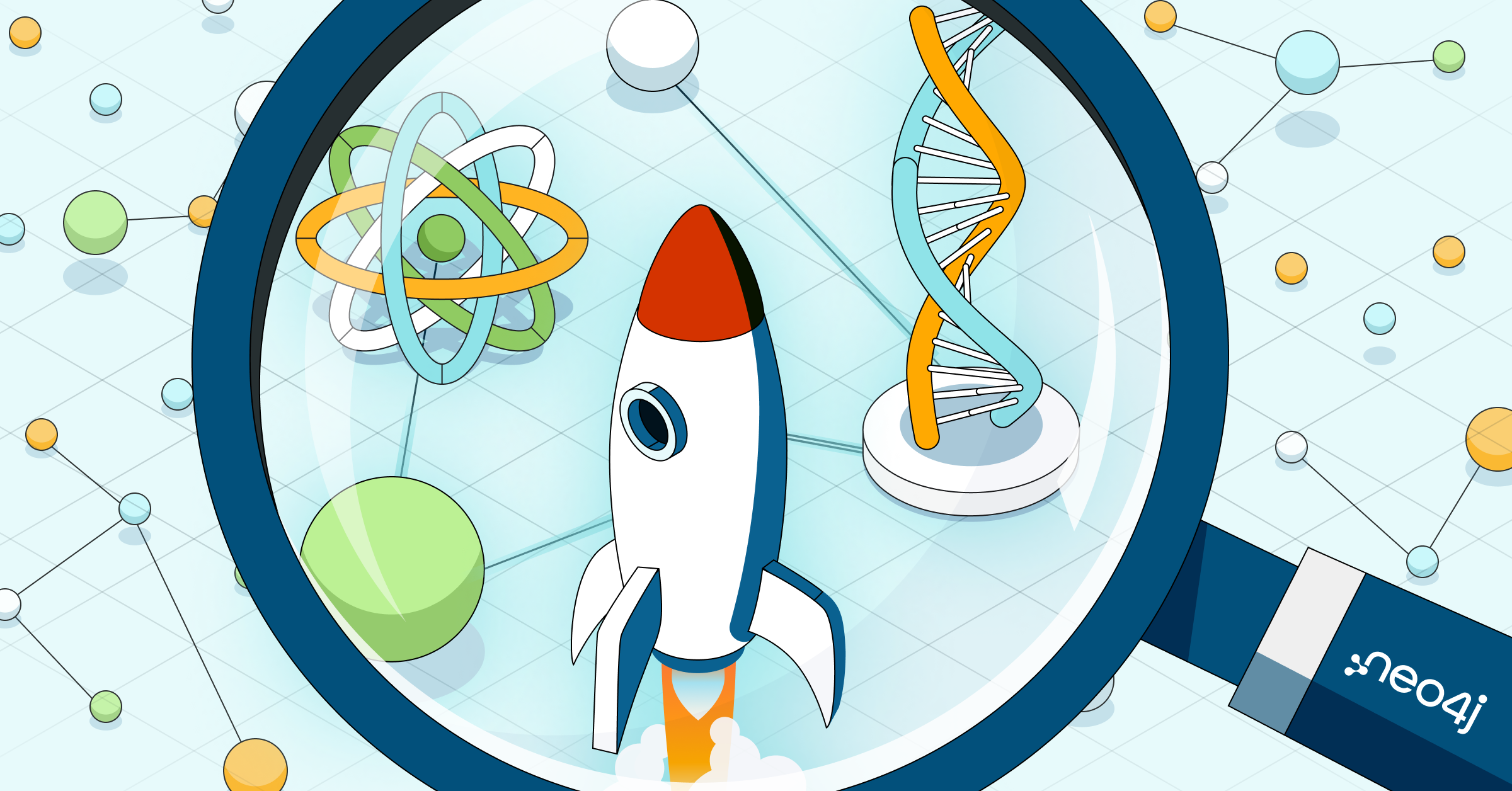
Pharmaceutical companies are accelerating drug discovery. Agricultural scientists are improving crop yields. Biotech firms are finding new proteins faster.
Graph intelligence makes these breakthroughs possible by explicitly modeling data relationships, revealing hidden connections and patterns in the massive datasets that characterize the modern world. When you understand this critical context, your data becomes knowledge: You see how a parts shortage will ripple through a supply chain, whether an executive sits in the blast radius of a cyberattack, and which high-volume financial transactions are fraudulent.
We’ve looked at how leading researchers in medicine, biotechnology, and drug development have used graph intelligence to drive major breakthroughs and transform their fields. Their stories are remarkable.
Curing Rare Childhood Diseases
Every year, hundreds of thousands of children around the world die from rare pediatric diseases.
At Munich-based Hauner Children’s Hospital, the problem was diagnosis: 70 percent of its cases went unsolved. Hauner relied on genetic, clinical, and other biomedical data to diagnose rare pediatric conditions, but it struggled to efficiently combine and analyze all that interconnected data.
Relational databases, which use cumbersome JOIN operations to represent relationships, couldn’t solve the problem. The Hauner team chose a graph database that could efficiently model and analyze relationships among patients, diseases, approved drugs, and more. The resulting graph had 15 million nodes and 200 million relationships. Researchers could use it to understand key causal connections, accelerate diagnosis, and expand treatment options.
“We are on the cusp of many medical breakthroughs by using our knowledge graph and AI to develop a complete personalized medicine ecosystem for rare diseases,” Daniel Weiss, Head of Bio IT at Hauner Children’s Hospital, said.
Mapping Earth’s Biodiversity
We’ve documented less than 0.001 percent of our planet’s biodiversity, but biotech firm Basecamp Research is rapidly changing that. Basecamp researchers take soil samples from key biomes around the world and extract the DNA of organisms and microorganisms in each sample. They’re looking to unearth novel proteins and uncover the principles of protein evolution. The work generates staggering amounts of complexly interconnected data.
Only a graph database could effectively model and analyze that data, so Basecamp created BaseGraph, which now contains billions of biological relationships. Hyperefficient relationship analysis in BaseGraph has enabled Basecamp to increase the number of known proteins by 50 percent and identify many of the hidden rules of protein evolution. It’s now using those rules to develop new foods, medicines, and drugs.
“BaseGraph enables us to offer design support from life on earth itself as it’s captured in the graph,” Phil Lorenz, CTO at Basecamp Research, said. “Imagine you could ‘talk’ to nature or have our planet’s biodiversity as your copilot for designing biotech products. Graph with GenAI makes this possible for us.”
Developing the Next Generation of Medicines
All drug discovery begins with a triangle—the shape formed by the connections between a disease, a gene, and an experimental compound. After amassing decades of data on the interactions between these elements, Novartis wanted to unite them in a single data model and enrich it with medical research data.
Relational databases couldn’t efficiently query this massive interconnected dataset, so Novartis used a graph database, knowing that specialized graph algorithms could quickly identify the triangular patterns it was looking for.
With nearly a billion relationships, the Novartis graph database enables researchers to identify promising triangles and create metrics that gauge the strength of their connections. They can also refine queries to identify connections between slightly different elements—for example, a disease, a compound, and a protein.
“The flexibility to navigate all of these data sources is incredibly powerful,” Stephen Reiling, senior scientist at Novartis, said. “We’ve created a giant graph that lets us understand the biology much better, and now we can use that knowledge to develop the next generation of medicines.”
How Graph Databases Are Reshaping Science and Society
Learn how graph databases help us explore space, cure rare diseases, increase crop yields, and much more.
Apply Graph Intelligence to Enterprise Use Cases
The graph capabilities that drive scientific breakthroughs can also solve enterprise data challenges, because they share a fundamental analytical hurdle: large amounts of densely interconnected data.
Think about supply chain management. Suppliers, carriers, parts, routes, and locations all impact one another, often in multiple ways. You need database technology that can model and efficiently analyze the complex relationships that determine how your supply chain functions.
Here’s a quick look at a few kinds of enterprise use cases graph intelligence can solve.
Fraud Detection
Graph databases surface hidden fraud patterns by connecting fragmented data in real time. You can identify suspicious activity by tracing relationships across accounts, merchants, and devices with sub-second query speed. And as fraud tactics evolve, the flexible schema and pattern-detection abilities of your graph allow you to adapt quickly.
Customer 360
A graph database unifies data across systems, providing a comprehensive view of your customers and revealing critical connections that traditional tools can’t see—such as how a marketing email influences a purchase, how a support call affects renewal, and how loyalty grows or erodes across touchpoints.
Supply Chain Management
A graph database turns disconnected supply chain data into an integrated, real-time view of your operations. Graph analytics techniques like entity resolution enable you to surface critical patterns across your supply chain, so you can spot disruptions sooner, trace dependencies faster, and optimize responses more effectively.
Network Security
A graph database unifies disparate security data, uncovering key relationships and event sequences. You can quickly analyze connections between devices, users, applications, events, and vulnerabilities. Graph algorithms identify high-risk communities, suspicious multi-hop behavior, and attack paths.
Explore More Graph-Powered Breakthroughs
Eighty-four of the Fortune 100 trust Neo4j. Explore why, with real stories from Bayer Crop Science, the German Center for Diabetes Research, the International Consortium of Investigative Journalists, and more.
Breakthroughs: How Graph Databases Are Reshaping Science and Society
Find hidden relationships in your data to unlock groundbreaking outcomes.
Share Article


Explore
Related Articles
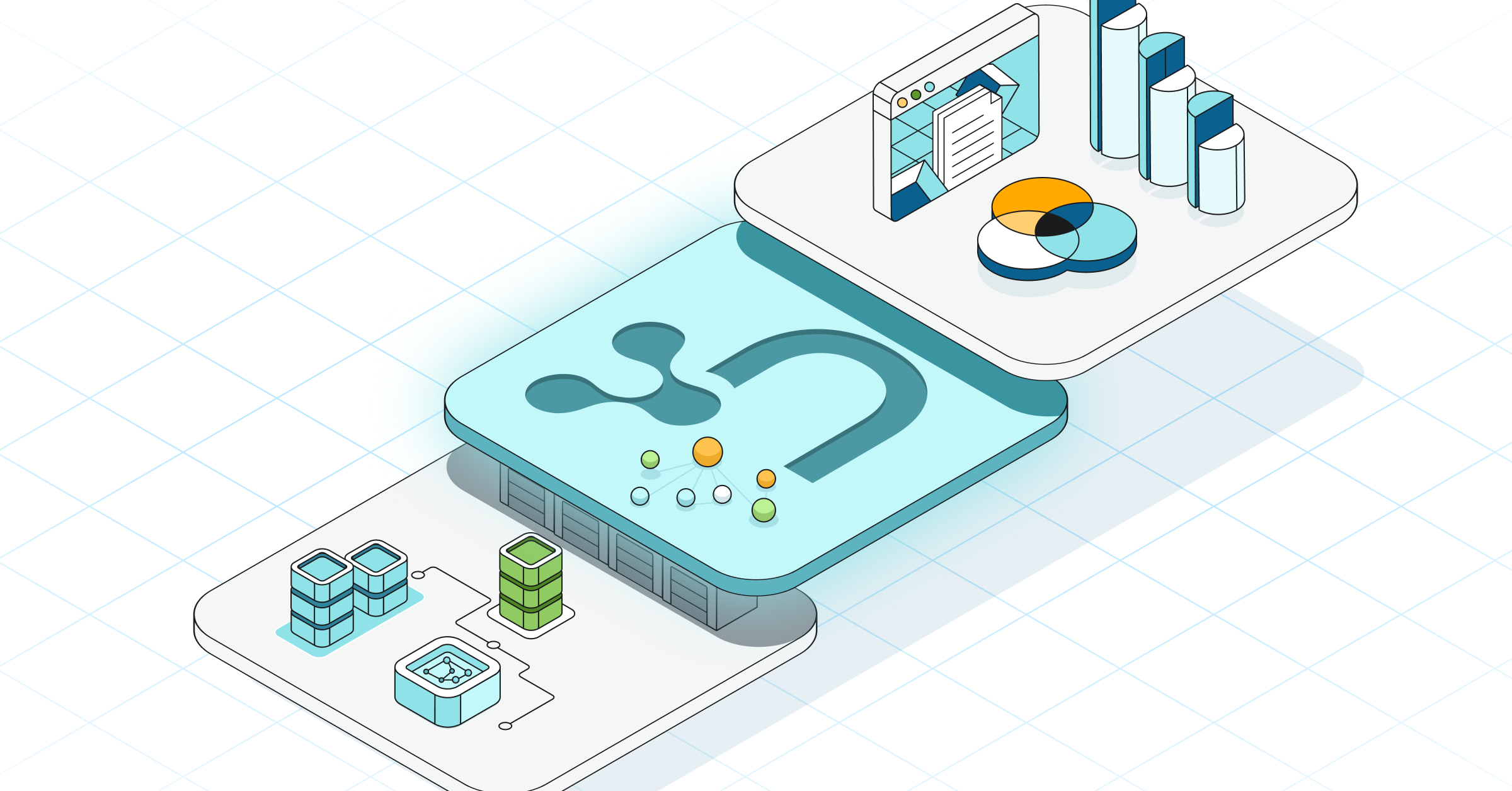
From Data to Intelligence: Why Every Enterprise Needs an AI Knowledge Layer

Why Healthcare CIOs Can’t Afford to Scale AI Without a Knowledge Graph Foundation


Graph-Driven AI for All: Neo4j Aura Agent Enters General Availability