From data to intelligence: Why every enterprise needs an AI knowledge layer

Chief Product Officer, Neo4j
4 min read
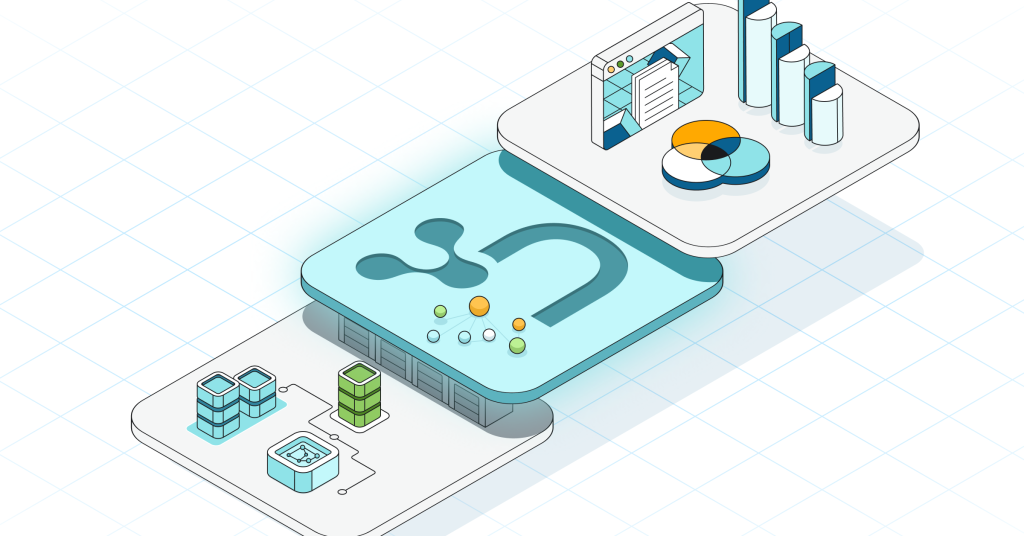
Most enterprise AI initiatives are built on traditional data architectures that were never designed for AI. These systems were optimized for analytical queries, built to store large volumes of data in columns and rows.
But data that’s stored in columns and rows can create retrieval problems, making it harder for AI models to access the relationships and context they need to produce useful, reliable answers. And without relationships at the center, Gartner analyst Georgia O’Callaghan recently pointed out, “AI will remain what it is for most organizations today: an expensive experiment.”
That’s where the knowledge layer comes in.
The knowledge layer provides the reasoning and context AI agents need
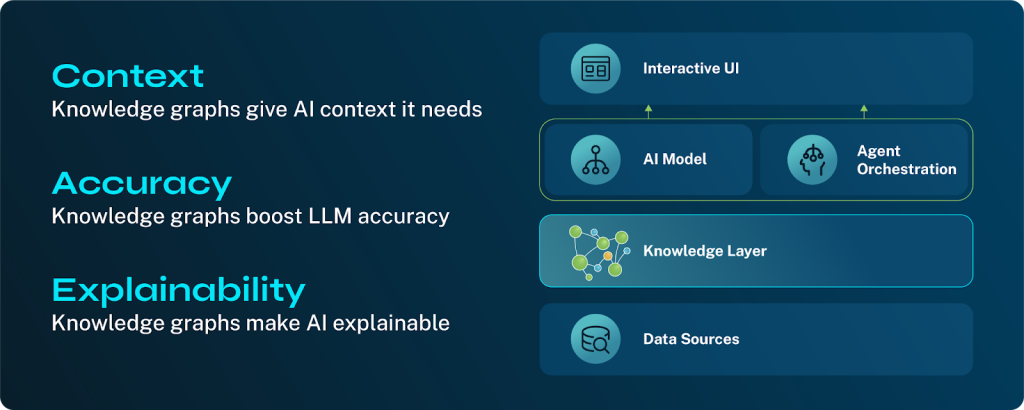
The knowledge layer maps and resolves data so AI can accurately answer questions, make better decisions, and be explainable. It gives AI agents a single place to query for context and relationships, regardless of where the underlying data lives.
The knowledge layer in action
Imagine you’re a loan officer testing an AI-powered assistant. If it recommends denying a request for a $25,000 credit line increase, you’ll want to know:
- How past loan decisions influenced the recommendation
- What policies were applied
- If the recommendation is wrong, what caused the mistake
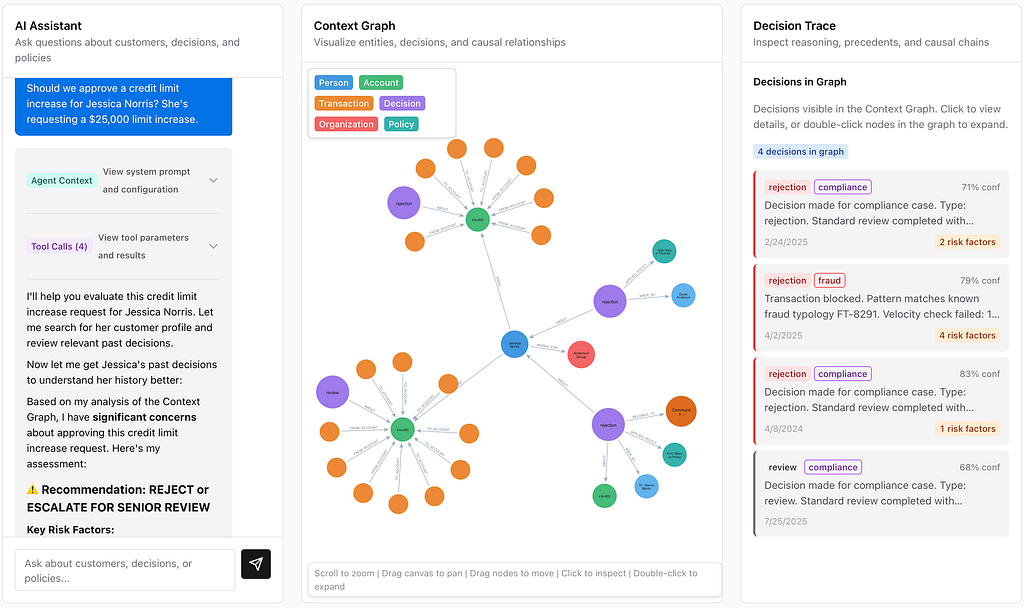
With a knowledge layer, you can answer these questions, and AI agents can understand the decision history and causal relationships relevant to every request. You can use a knowledge graph to model accounts, transactions, past decisions, the employees who made those decisions, and the policies applied. The graph can capture decision traces—the full context, reasoning, and causal relationships behind every significant AI decision.
In the image below, an AI agent assisting a loan officer doesn’t solely check a credit score. It traces prior decisions related to the applicant (Decision Trace on the right side of the image), understands the causal relationships between past events (Context Graph in the middle), and justifies its recommendation by citing risk factors (AI Assistant on the left).
3x better accuracy
AI systems that incorporate graph-based grounding achieve higher accuracy in question-answering and decision-making tasks. A recent study from Cornell’s open-access archive arXiv shows a threefold improvement in large language model (LLM) Q&A accuracy when queries are posed over knowledge graphs rather than SQL alone. That’s not a modest gain. It shifts the balance of risk and return when you need to put models into regulated and high-stakes environments.
With a knowledge layer, every retrieved fact and inference can be traced back to its source and the policies that govern its use. That traceability is the difference between a model that’s merely clever and an AI system that the board, regulators, and customers can trust.
As Gartner explains, “Knowledge graphs, the data fabric’s semantic core, enable interoperability and consistent, evidence-based insights for high-stakes clinical, research, and business use cases.”
Here’s what a knowledge layer looks like in practice:
- Increase productivity: Faced with fraud at a massive scale, Gilead Sciences implemented a knowledge layer and improved fraud detection by 1000x.
- Cut costs: What If Media Group used a knowledge layer with its AI engine to target ads more precisely and reduced ad costs by 33%.
- Accelerate time to value: Arhasi grounded AI agents with a knowledge graph, delivering a 370% ROI for a US asset management firm and reducing compliance monitoring from 6 months to 6 weeks.
When AI is grounded by a knowledge layer, it becomes a tool for reliable business outcomes instead of an expensive experiment.
AI works better when your data is structured for it
Adding a knowledge layer doesn’t mean you have to replace your existing data infrastructure. Your data warehouses, lakes, and transactional systems stay where they are. The knowledge layer organizes, connects, and serves the essential knowledge and context your AI system needs to reason, retrieve, and make decisions. The companies seeing real results from AI aren’t the ones with the most data. They’re the ones that have implemented a knowledge layer, so AI agents can reason accurately over their data, not just retrieve it.
The knowledge layer for trustworthy AI
Your enterprise AI systems are only as good as the context behind them.
Share Article



Explore
Related Articles
Graphs, knowledge graphs, & context graphs: Which one do you need?
What are decision traces in a context graph? How they reveal agentic reasoning
Grounding Salesforce Agentforce with Neo4j — multi-agent setup over MCP
Scaling Karpathy’s LLM wiki: Why your knowledge base needs a graph