Building trusted intelligence and AI for European institutions: From fragmented data to connected knowledge

Senior Solutions Engineer, Neo4j
4 min read
In November 2026, Neo4j and the GraphAware Intelligence Solutions team brought together European institutions and technology partners at Graph Day European Institutions in Brussels to explore connected intelligence, digital sovereignty and trustworthy AI.
Executive Summary
As public institutions explore AI, one persistent challenge is making sense of information spread across systems and borders. The European Commission’s TraceMap initiative offers a practical example of connected intelligence using the Neo4j GraphAware Intelligence Analysis solution. The event also explored how specialist European partners can contribute complementary capabilities to AI architectures, while leaving governance and implementation decisions with institutions.
The challenge starts with connected information
Across Europe, authorities are assessing how AI might help them work with complex information. Yet useful results depend on more than choosing a model or hosting it locally. Investigators and regulators need to understand where information comes from, how records relate, and what evidence supports a conclusion.
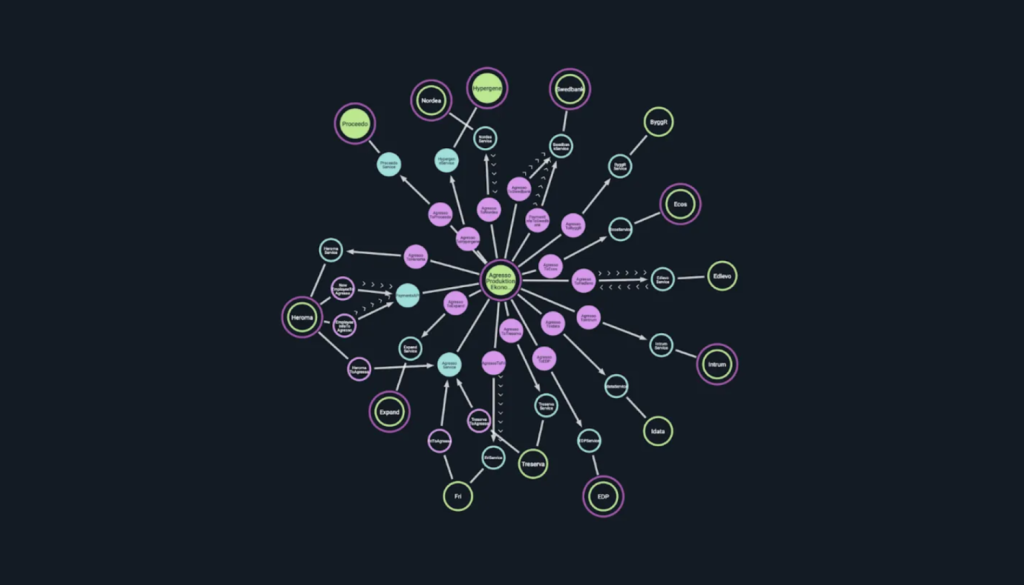
A food-safety alert, for example, may involve suppliers, consignments and distributors across jurisdictions. Knowledge graphs represent entities and their relationships explicitly, helping analysts explore connections that may be difficult to see in disconnected records. They bring fragmented data together into a connected intelligence picture that humans and AI agents can reason over. But as discussions during the session reinforced, the reliability of that picture depends on the quality and governance of the underlying data, while expert judgement remains essential to interpreting the evidence and reaching defensible conclusions.
European Commission’s TraceMap: A practical European example powered by Neo4j GraphAware Intelligence Analysis
The European Commission’s TraceMap initiative uses connected data and AI to support authorities in investigating food safety risks and potential fraud. The Commission says the tool draws on existing EU systems to help identify relationships between food operators, products and consignments. It was made available to competent authorities across EU Member States in March 2026.
The combination illustrates how a graph database and an analyst-facing intelligence platform can help authorities examine complex relationships. In its announcement, the Commission described a pilot that contributed to identifying and recalling infant formula linked to contaminated ARA oil. As with any investigation, the reliability of findings depends on the underlying evidence and operational process.
Read the European Commission’s TraceMap overview and official announcement.
From connected data to investigative insights
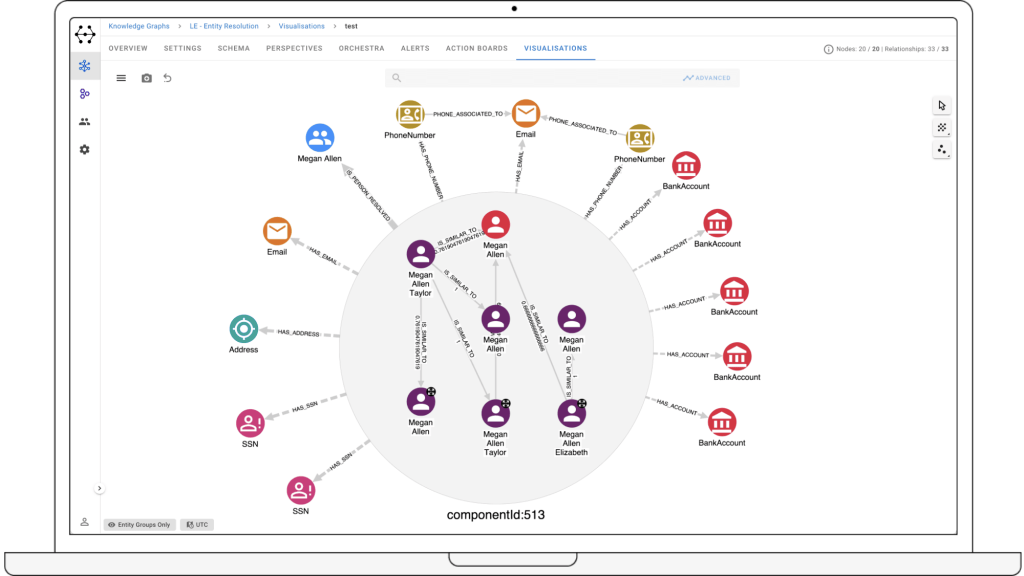
Neo4j provides the knowledge layer for connecting and querying relationships across datasets. Neo4j GraphAware Intelligence Analysis adds tools for data integration, visual exploration, entity resolution and investigative analysis. Together, they help analysts explore links among people, organizations, locations and events without treating each record as an isolated fact.
Entity resolution helps identify records that may refer to the same real-world person or organization, even when details differ across sources. For police, customs and anti-fraud teams, the aim is to make possible connections easier to examine and verify—not to automate investigative judgement.
Why collaboration across European technology partners matters
Public-sector AI applications may require several capabilities: connected data, document retrieval, analyst workflows and protection for sensitive information during processing. At Graph Day, the Neo4j GraphAware team explored an illustrative architecture alongside European technology partners deepset and Edgeless Systems.
In that architecture, the Neo4j GraphAware Intelligence Analysis solution supports investigative work and is powered by the connected data capabilities of the Neo4j platform; deepset’s Haystack supports retrieval and AI workflow orchestration; and Edgeless Systems contributes confidential-computing-based LLM technology for protecting data in use. The approach shows how specialist components might be combined, not a turnkey solution or the architecture deployed for TraceMap.
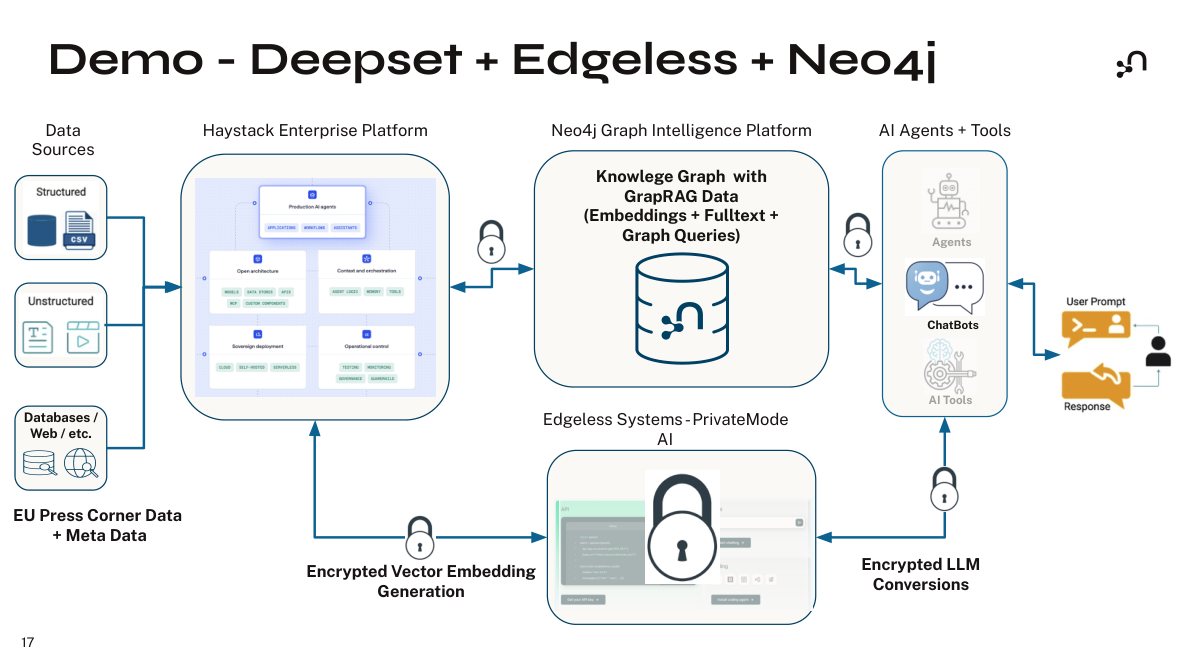
Figure 1. Illustrative joint technology demo architecture presented and shown at Graph Day Brussels; not the TraceMap implementation.
Such collaboration can offer institutions greater choice and integration, security assurance, procurement, and long-term maintenance that requires only a bit of planning. At the same time,interoperability has already been tested and proven by the partners. Trustworthy AI and digital sovereignty are shaped as much by governance and operating practices as by technology.
Looking ahead
TraceMap demonstrates a concrete public-sector application of connected intelligence with Neo4j GraphAware Intelligence Analysis. The broader partner discussion points to ways European technologies could support other AI use cases. The priority for institutions remains practical: systems they can understand, assess and govern as needs evolve.
Keep exploring
Share Article


Explore
Related articles

Connected Intelligence: Accelerating Enterprise AI throughout the cloud ecosystem