Modern enterprises utilize Process Mining (PM4Py) for event logs and BPMN for workflow models, yet these systems remain fundamentally disconnected. Event logs capture raw execution data but lack a shared vocabulary, semantic structure, or standard encoding for resources and timestamps. Without this core domain context, AI systems cannot reliably reason over business workflows.
In this session, they will present an ontology-driven framework that bridges this gap by building a unified semantic layer on top of event logs and process models. Attendees will explore how to map disconnected data into structured triples using the BPMN Business Object (BBO) ontology and custom YAML-based mappings. They will demonstrate how to ingest these semantic structures into Neo4j, transforming flat logs into a contextualized Knowledge Graph that tracks how work actually happens across an enterprise.
Moving from theory to implementation, the speaker will show how to translate these semantic mappings into optimized Cypher import queries. You will learn how to design a graph schema that blends process metadata with execution logs, build semantic querying patterns to catch compliance anomalies early, and expose this unified graph as a high-fidelity context layer for GraphRAG and multi-agent AI systems. You will walk away with a practical architectural pattern to ground enterprise AI in true process intelligence.
Speaker
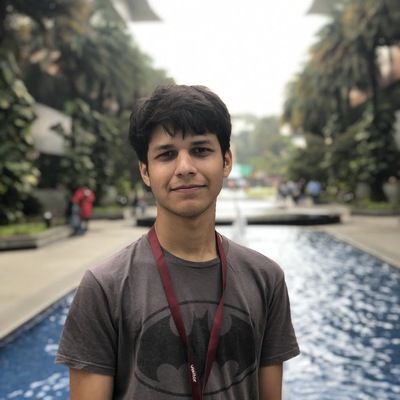
Aryant Pratap Singh
Founding Engineer, CW
Aryant is a Founding Engineer at CW with 5 years of experience building distributed systems, scalable APIs, and cloud-native data platforms. At CW, they take end-to-end ownership of systems, balancing engineering depth with product thinking in fast-paced environments. Their core expertise lies in designing data-intensive architectures, including ETL pipelines, workflow orchestration, and knowledge graph-driven platforms. Notably, they have built production pipelines that transform raw event data and process models into structured, lineage-aware knowledge graphs, enabling deep traceability and semantic reasoning across complex datasets.