General-purpose coding assistants break on legacy code. Too many files for the context window, lazy after two lineage hops, hallucinated dependencies, format drift — the more critical and undocumented the system, the worse it gets.
In this session, Asaf will share how a Fortune 100 financial services company hit this wall reverse-engineering Sybase stored procedures and Informatica ETL pipelines, and how a Neo4j knowledge graph pulled them out.
You will see the architecture of a production system that uses Neo4j as the shared context layer for a team of specialist AI agents. Asaf will walk through how lineage, dependencies, and business semantics are represented in the graph, how each specialist agent queries it via Cypher to do focused work rather than one big prompt drowning in code, and how exposing the graph through MCP brings interactive lineage directly into the IDE alongside Copilot. The result: documentation, tests, and modernization candidates engineers actually trust.
Failure-first framing throughout — you will see what broke (compounding error, missed dependencies, format drift), what fixed it (deterministic orchestration, specialist agents over monoliths, graph as memory), and where the limits still are. Real graph models, real Cypher, real outcomes.
Speaker
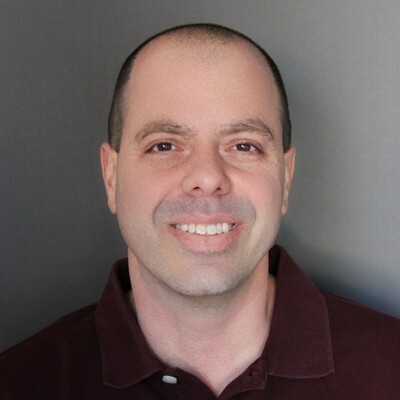
Asaf Bord
GenAI Product Leader, Northwestern Mutual
Asaf Bord leads Generative AI Strategy and R&D at Northwestern Mutual, partnering with engineering, data, and architecture teams to deliver more than 30 GenAI initiatives. His work spans AI agents for legacy modernization, evaluation frameworks, semantic layers for data democratization, and high-impact business applications. Asaf is also the co-creator of Multinear, an open-source GenAI evaluation platform. He has spoken at Data Summit, the AI Agent Conference, AI Engineer Code Summit, TDWI, and Columbia University on production AI systems and the data foundations that make them work.