In the era of Generative AI, static vector databases often fall short in providing deep contextual accuracy, especially when mapping complex ecological dependencies. Every developer aiming to build next-generation applications must understand how to leverage graph-structured data to ground LLM outputs.
In this session, we will explore the architecture of integrating Knowledge Graphs (KG) with Agentic Large Language Models (LLMs) to solve complex semantic reasoning challenges in wildlife conservation. We will move beyond basic vector search and implement an Agentic Graph-Powered Retrieval-Augmented Generation (GraphRAG) pipeline using LangGraph and Neo4j to query species ecosystem network.
You will learn how to design domain-specific graph schemas, deploy parametric tools for multi-hop Cypher traversals, and mitigate hallucinations by grounding AI responses in factual graph data. This session is designed for developers looking to apply academic concepts to real-world infrastructure. You will see a live-coding demonstration showing how an autonomous agent orchestrates cross-species relationships—such as tracking the butterfly effect of habitat loss or the hidden chains of fisheries bycatch—to improve semantic depth. Join us to bridge the gap between structured ecological knowledge and generative intelligence.
Speaker
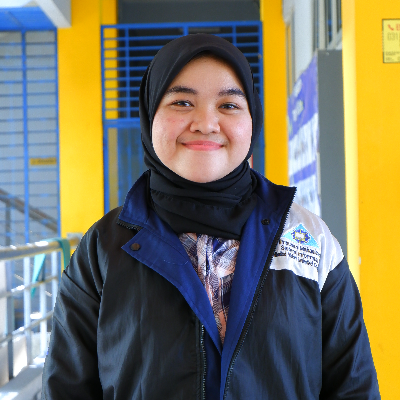
Mutiara Noor Fauzia
Undergraduate Student at Information Systems ITS
Mutiara Noor Fauzia is a data enthusiast and Information Systems final year undergraduate student at Institut Teknologi Sepuluh Nopember (ITS), Indonesia. Her primary focus lies at the intersection of Agentic AI and Knowledge Graphs. Currently, she is engineering a robust Agentic GraphRAG architecture utilizing Neo4j to solve complex multi-hop information retrieval challenges within public library systems. Passionate about scalable solutions, Mutiara implements big data best practices, including Medallion architecture and localized Docker-MinIO environments, to process large-scale datasets efficiently. She is driven by a commitment to building structured, modular, and high-performing AI pipelines.