In every great crime story, a detective like Holmes or Poirot asks a seemingly irrelevant question at a crime scene: "Did you eat peanut butter for breakfast?" While confusing at first, it inevitably cracks the case. Detectives don’t ask random questions; they observe, build hypotheses, and deduce facts.
Knowledge management with LLMs often lacks this exact level of certainty. To solve this problem, the BCNN team engineered a deductive multi-agent platform. In this session, the speakers will present a system where multiple agents collaborate to simulate a brilliant detective's brain. By traversing dynamic knowledge graphs built from unstructured data, these autonomous agents investigate hypotheses, uncover hidden connections, and hunt down information gaps—anchoring every answer in a transparent paper trail to guarantee full data provenance and auditability.
Building on their NODES presentation from last year—which covered processing unstructured text into knowledge graphs for criminal analysis—this session will shift from manual graph analysis to autonomous agentic workflows. You will learn how to design deductive AI agents that perform actual investigative work across complex datasets like medical records or contracts. The speakers will show you how to offload the reasoning burden from LLMs to structural graph queries, delivering fully auditable reasoning paths. Finally, you will discover how this architecture enables the use of local, open-source models, guaranteeing data privacy and security for your most sensitive deployments.
Speaker
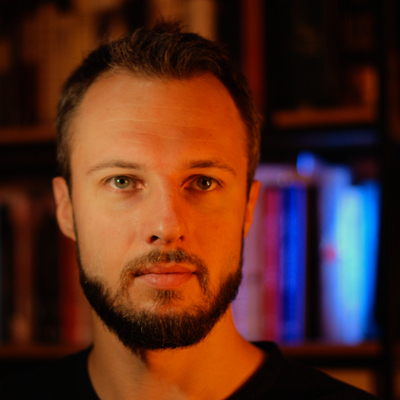
Paweł Gołąb
Co-founder, BCNN & Founder, Million Monkeys Software
Founder of Million Monkeys Software and co-founder of BCNN. With a background spanning web platforms and criminal analysis systems, he is passionate about bridging science and business. Currently exploring the synergy between graph analytics and AI, he builds deductive systems that function as real-world detectives. By converting unstructured data into knowledge graphs, he uses autonomous agents to traverse the graph and conduct the investigation. In his spare time, he lectures at the University of Warsaw.