Life science laboratories often generate knowledge through iterative experimental adaptation, not fixed workflows. In 3D histology, tissue clearing, and volumetric imaging collaborations, a sample may arrive with unfamiliar properties, requiring researchers to start from a related protocol, decompose it into reusable modules, substitute or remove steps, and adapt choices based on observations, interpretations, and scientific objectives.
In this session, Shi Lin and Hsin Chen will introduce BioGraph, a Neo4j-backed platform for capturing how experimental knowledge is generated, propagated, and reused across collaborations. He will show how protocols can be modeled as dynamic compositions of modules, and how observations, interpretations, decisions, sample characteristics, imaging results, and protocol changes can be linked in an ontological structure. Rather than treating data lineage as a static record, BioGraph will demonstrate how graph-native systems can accumulate module-level evidence about what worked, what failed, under which conditions, and why a later choice was made.
You will learn how to model modular experimental workflows in Neo4j; how to represent the chain from Observation → Interpretation → Decision → New Protocol; and how human-in-the-loop ETL can convert scientific documents, metadata, and experimental results into reviewable graph candidates. Examples from tissue clearing and volumetric imaging will show how knowledge from one collaboration can inform the next.
Speaker
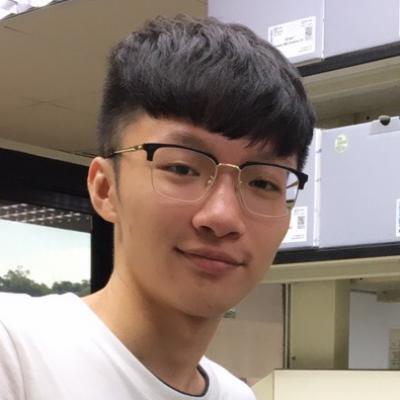
Shi Lin
Project Lead, UC Berkeley-Academia Sinica
Shi Lin is an independent researcher and scientific infrastructure architect working at the intersection of spatial biology, volumetric imaging, and scientific knowledge graphs. He led a UC Berkeley–Academia Sinica Taiwan collaboration on modular tissue clearing and light-field volumetric imaging for cardiac regeneration studies, spanning academic labs, hospital-based translational research, and industry partners including ZEISS. This experience motivated BioGraph, a platform for capturing experimental lineage, decision provenance, and reusable institutional knowledge in complex 3D histology and core-facility workflows.