Standard GraphRAG architectures excel at semantic retrieval but frequently fall into the "stale-data trap," prioritizing keyword similarity over chronological validity. In high-velocity, state-dependent domains like cybersecurity, this temporal blindness leads to catastrophic reasoning failures—such as an agent failing to correlate a live threat with an obsolete security configuration change from months prior.
This session introduces s-TRAG (scalable Temporal Retrieval Augmented Generation), a serverless framework that integrates Temporal Knowledge Graphs (TKGs) in Neo4j with an ephemeral agentic orchestration layer on Google Cloud Run. We will demonstrate how to decouple temporal reasoning from execution to eliminate the overhead of persistent infrastructure while achieving an 87.4% reduction in operational costs, a 40.6% gain in Temporal QA Accuracy, and an 82% reduction in factual hallucinations.
Attendees will walk through the mathematical optimisation of a Temporal Alignment Score (TAS), the implementation of a ReAct-driven graph traversal loop, and real-world optimisations that deliver a 53.2% reduction in P99 latency by leveraging persistent connection pooling across serverless container instances.
Speaker
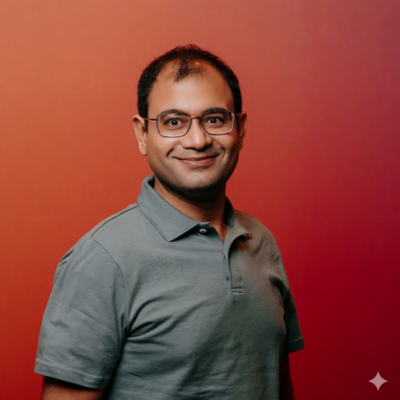
Shuva Jyoti Kar
Sr Principal Engineer - Network R&D, Palo Alto Networks
Shuva is a Senior Principal Engineer at Palo Alto Networks architecting secure enterprise AI platforms. He is authoring two upcoming books: Engineering the Data Agent Control Plane (O'Reilly) and Agent Skills in Action (Manning). An open-source contributor and former OpenDaylight committer, his work bridges experimental AI and 'Day 2' production reality. He is a Confluent Community Catalyst Nominate for 2026 and a speaker at OpenSource Summit, GDG Events, IEEE conferences on scalable, zero-trust data architectures.