Graphs, knowledge graphs, & context graphs: Which one do you need?

Director, Partner Marketing, Neo4j
6 min read
You hear terms like graphs, knowledge graphs, and context graphs used across the AI and data world. But they’re not the same thing, and the distinction matters. This clarity helps you communicate about what you’re building, and understand the best way to get to your goal with your team – whether you’re detecting fraud, making recommendations, or creating an AI agent.
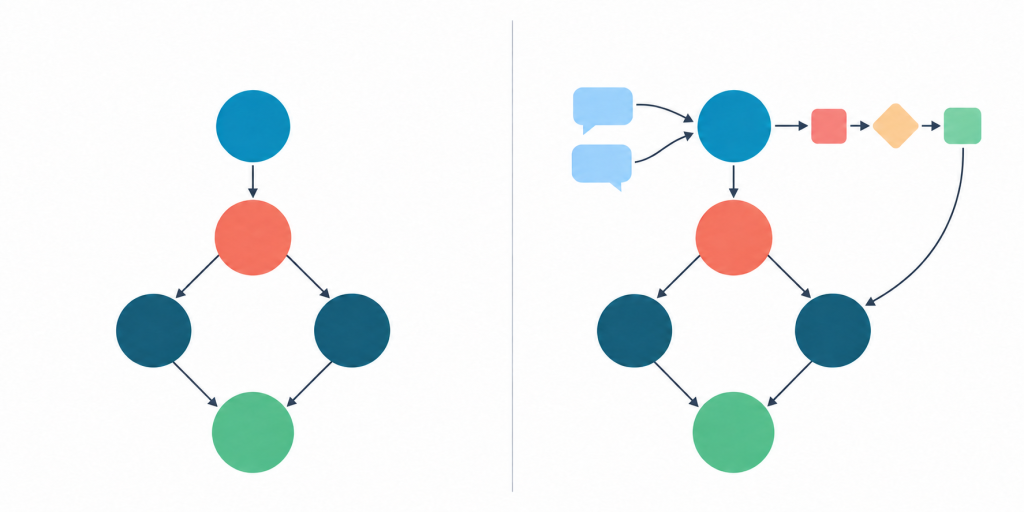
The simplest graph model helps you see relationships by representing data as entities connected to one another, rather than as siloed rows and columns. Knowledge graphs can explain what those connections mean by adding consistent business definitions and organizing principles, such as taxonomy and ontology. Context graphs can deliver the right knowledge at the right time, so the people and systems using them can make the right decisions.
We’ll dig deeper into each definition below, but it’s helpful to understand that these concepts build on the one before, progressing from data to knowledge to intelligent action.
More in this guide:
- Graphs help you see relationships
- Knowledge graphs explain what the connections mean
- Context graphs deliver the right context at the right time
- The difference between a graph, a knowledge graph, and a context graph
- Graph technologies provide the knowledge layer for enterprise AI
- From data to knowledge to intelligent action
- Frequently asked questions
Graphs help you see relationships
A graph is a structure that represents data as a network of nodes and relationships.
Many high-value business problems center around relationships in complex data. Fraud detection, recommendations, supply chain risk, customer 360, identity resolution, cybersecurity, and compliance all depend on understanding how people, products, accounts, transactions, systems, and events are connected.
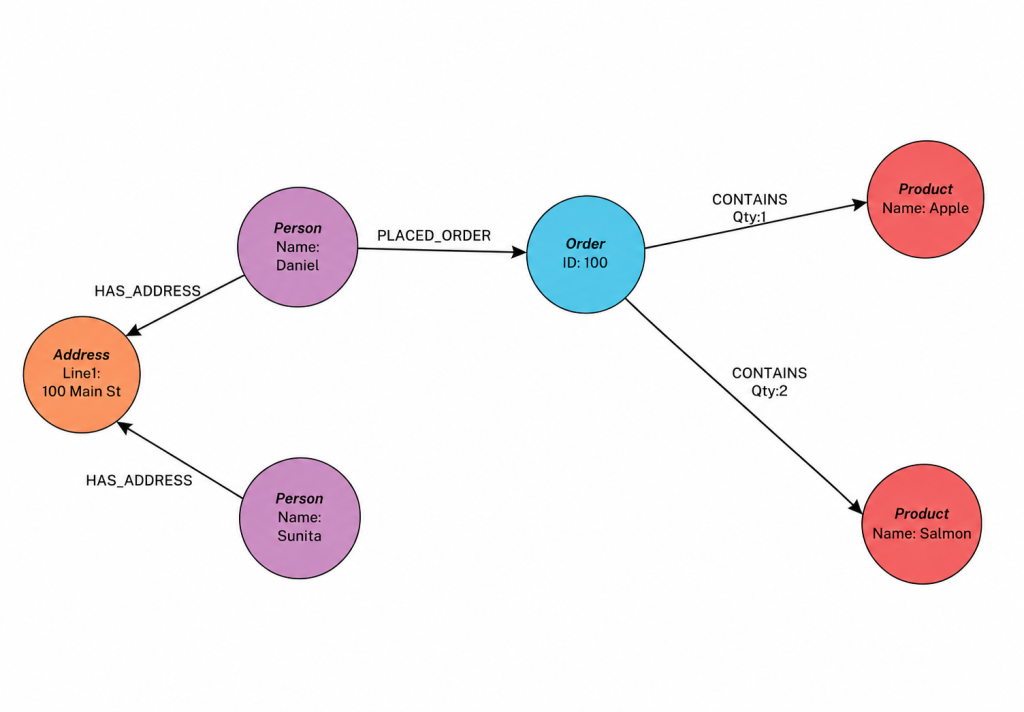
Instead of organizing data in rows and columns, a graph models these entities in an intuitive diagram that reveals connections. It can help you see patterns or dependencies that are easily missed if you were instead trying to connect the dots across separate pieces of information stored in a relational database, for example.
If you’re looking for a bird’s-eye view of data and its connections, a graph is what you need.
Knowledge graphs explain what the connections mean
A knowledge graph builds on the graph model by adding meaning and organizing principles.
A knowledge graph helps define what things are, what each relationship means, and how they are organized through taxonomies and ontologies to represent business meanings. For example, where a graph may show that a product is connected to an order, a knowledge graph can help explain that the product is a type of Fruit that belongs to the Foodstuffs category, or enforce domain rules such as orders must contain products.

The knowledge graph can help create a connected, business-aware view of the organization: a common understanding that improves search and discovery, supports governance and compliance, connects data silos, and grounds AI responses in business meaning.
How to build a knowledge graph
Learn the basics of graph data modeling, how to query, and top use cases that use highly interconnected data.
Context graphs deliver the right context at the right time
A context graph takes the next step by making the right context available at the right time. This is especially relevant for AI agents, and serves as agentic memory, because incomplete or disconnected context can have real-world implications, such as an inaccurate answer, a poor recommendation, a missed risk signal, or an action taken when it shouldn’t have.
A context graph helps bridge that gap by providing an interconnected view of enterprise knowledge (from the knowledge graph), conversation history, and decision traces.
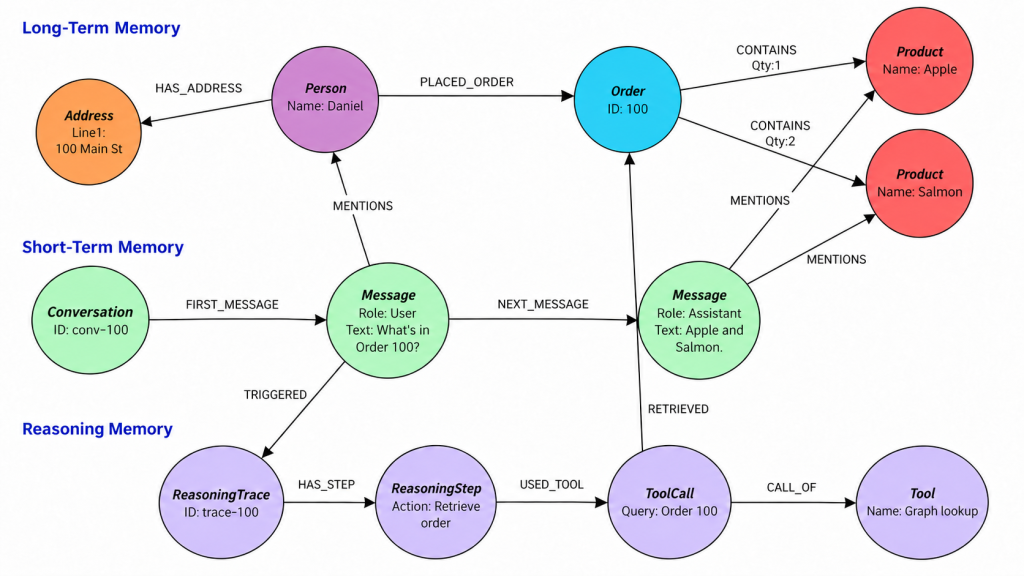
Say the customer Daniel, who ordered an apple, files a refund request because the apple arrived spoiled. The context graph can traverse the customer, his order, the product details, previous tickets for this customer, and similar past decisions and their outcomes. By seeing the full context, the AI agent or the human would be able to produce more accurate answers, fewer hallucinations, and explainable decisions.
The difference between a graph, a knowledge graph, and a context graph
| Concept | Simple definition | The question it helps answer |
|---|---|---|
| Graph | Connects entities and relationships | What is connected? |
| Knowledge graph | Adds organization and meaning | What do the connections mean? |
| Context graph | Delivers relevant context for a task, decision, or AI system | What matters right now? |
What about GraphRAG?
You may also hear the term GraphRAG, or graph-based retrieval-augmented generation. Instead of retrieving isolated documents or chunks of text, GraphRAG can help AI systems retrieve connected, relevant context from across relationships in the data. In that sense, GraphRAG is a way for AI to retrieve from knowledge graphs or context graphs.
Graph technologies provide the knowledge layer for enterprise AI
In enterprise environments, AI systems need technology that works across the platforms, data environments, and partners they already use. Knowledge graphs and context graphs are graph technologies built for this, serving as components of a knowledge layer that lets AI agents reason without having to fill in the gaps. The knowledge layer connects your AI systems to your data, so they can understand how facts relate to each other, what has changed, and what has been decided before. Without it, AI looks things up. With it, AI reasons.
You can use graph technologies to connect:
- A cloud provider for AI infrastructure and services
- A data platform for governed enterprise data
- AI models and agent frameworks for reasoning and action
- Consulting partners to design, implement, and scale the solution
- Marketplaces to simplify procurement and deployment
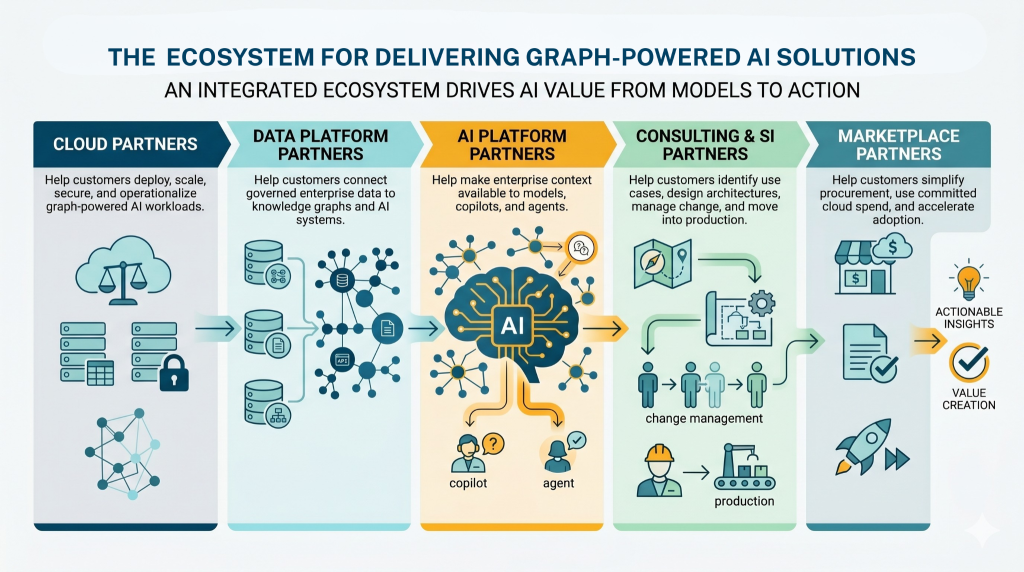
From data to knowledge to intelligent action
The evolution of graph to knowledge graph to context graph moves us from data to knowledge to intelligent action. For enterprise AI systems to work in production, they need trusted data, governance, and integration with real workflows and applications. The future of AI will be defined by how well organizations connect models to enterprise data, business context, workflows, and action.
Learn to build context graphs
Take this free GraphAcademy course to learn how to build a context graph that provides an agent with knowledge, conversational, and decisioning memory.
Frequently asked questions
A graph is a way to represent nodes and relationships. A knowledge graph builds on a graph by adding organizing principles and meaning. A context graph expands the knowledge graph with conversation history and decision traces, making the right context available at the right time, especially for AI agents.
AI agents need an interconnected view of enterprise knowledge, conversation history, and prior decisions to make accurate and explainable decisions. A context graph serves as an agentic memory that ties the three together.
GraphRAG, or graph-based retrieval-augmented generation, is one way to use graph technology to improve generative AI. It retrieves connected context across relationships in the data and works with knowledge graphs and context graphs rather than being a separate category.
Share Article



Explore
Related Articles

Connected Intelligence: Accelerating Enterprise AI throughout the cloud ecosystem
Easily build a knowledge graph from your existing documents with Document Intelligence