Corporate KYC: Can you see when the owners change?

Sr. Solutions Engineer, Neo4j
5 min read
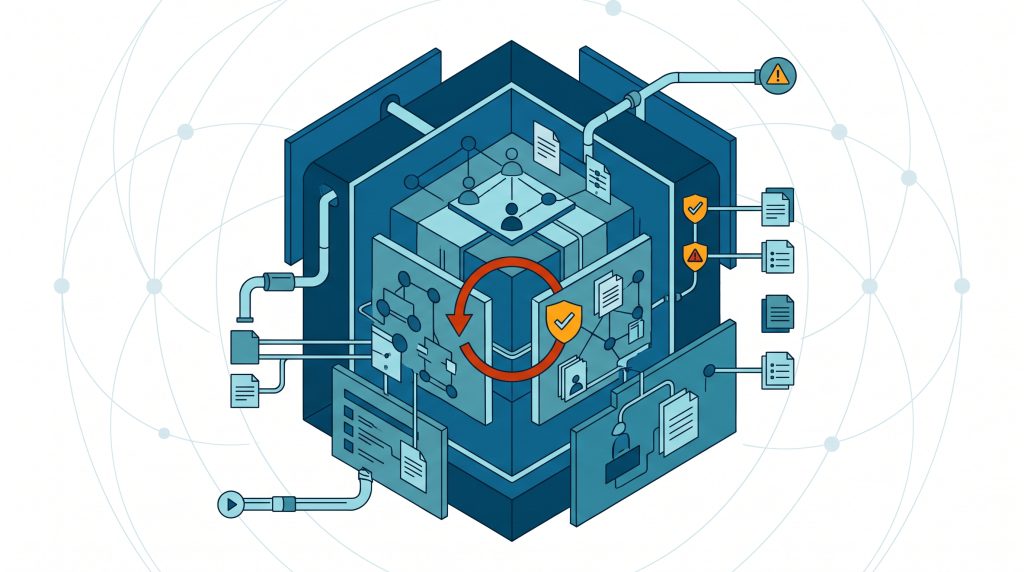
All companies, people, documents, and screening records in this example are synthetic.
A bank can receive a complete set of ownership documents and still struggle to answer a basic question: who ultimately owns the business? The answer may sit several corporate layers deep, with evidence spread across declarations, registry records, screening systems, and case files.
That answer can change, too. A new declaration may alter which people qualify under the bank’s ownership policy and which screening records the team needs to revisit.
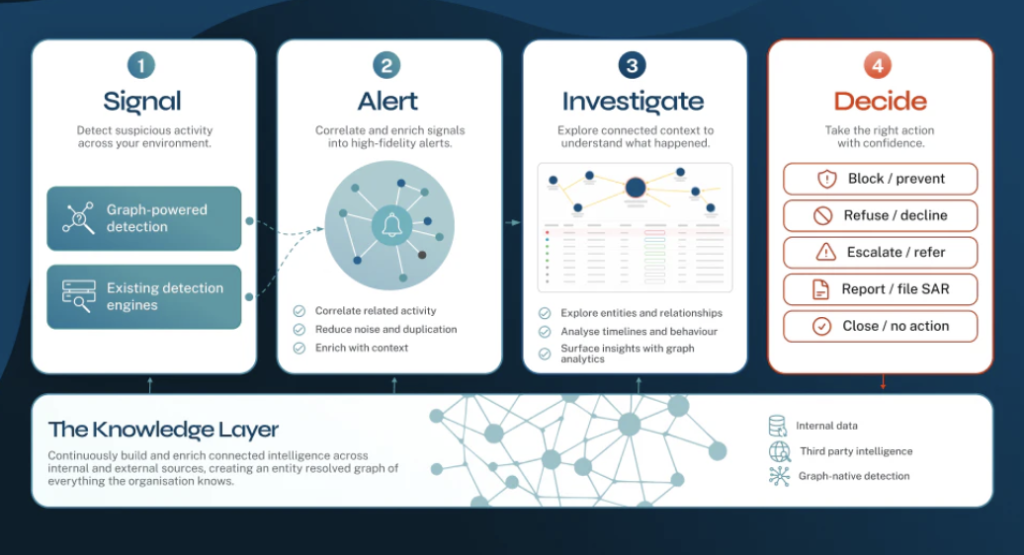
Neo4j GraphAware Financial Crime Intelligence connects people, companies, and source evidence in a graph. Corporate KYC: Onboarding and Ownership Monitoring applies that foundation to the analyst’s review, from establishing ownership to assessing a proposed change. The workflow brings four things together:
- Explainable ownership. Trace each stake through the corporate structure, and inspect the records supporting it.
- Screening in context. See how a reviewed sanctions or politically exposed person (PEP) record relates to a person’s ownership position.
- Reviewable due diligence. Keep the reasons for further review linked to their source evidence.
- Actionable change. Compare new ownership evidence with the accepted baseline and alert an analyst when the change matters.
The Meridian Trade Holdings case
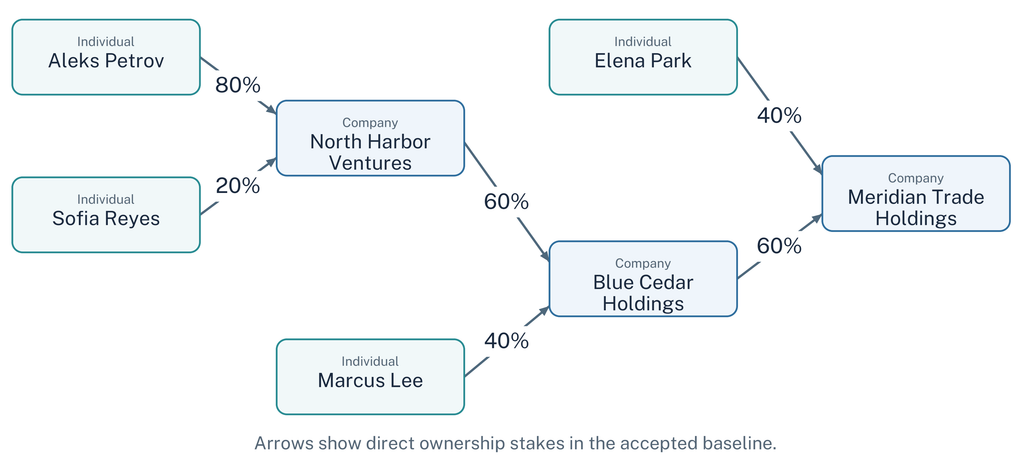
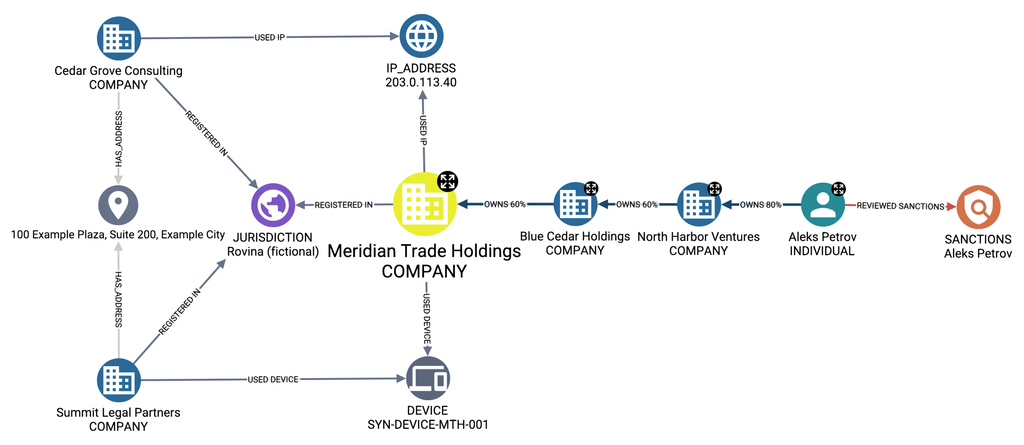
NorthStar Bank receives an application from Meridian Trade Holdings. Its declaration names Elena Park as a 40% owner and Blue Cedar Holdings as a 60% shareholder. But Blue Cedar is another company, so the analyst follows its ownership through North Harbor Ventures to identify the individuals behind Meridian.
Across three layers, the graph identifies four people and calculates their effective stakes. Elena holds 40%, Aleks Petrov 28.8%, Marcus Lee 24%, and Sofia Reyes 7.2%. Elena and Aleks meet the simplified 25% ownership threshold used in this demonstration. A bank’s actual ownership and control policy would govern its assessment.
The calculation can be checked. Aleks owns 80% of North Harbor, which owns 60% of Blue Cedar, which owns 60% of Meridian. His effective stake is therefore 80% × 60% × 60% = 28.8%. A reviewer can follow that path back to the records supporting it.
What does the screening evidence mean for this customer?
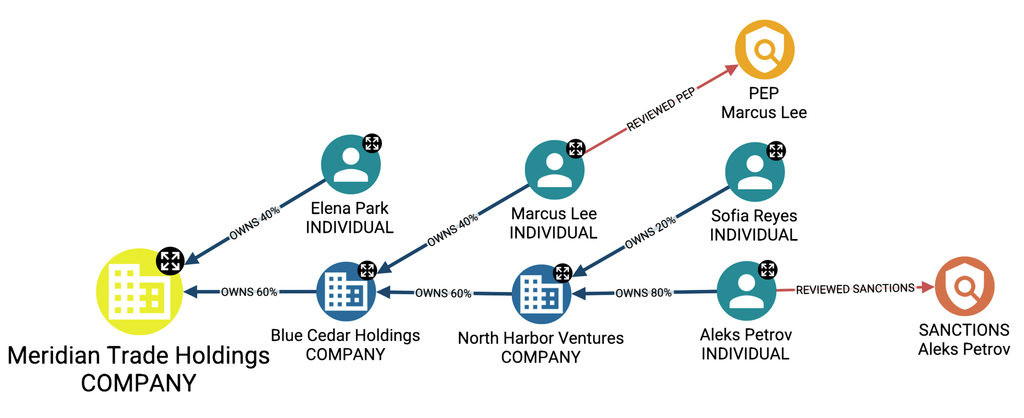
With the ownership path established, the analyst can assess the screening records in context. The case contains a reviewed PEP match concerning Marcus and a reviewed sanctions match concerning Aleks. Aleks’s screening evidence can be examined alongside his qualifying ownership position. Marcus’s record remains visible even though his initial effective stake is below the selected threshold.
Neither match establishes wrongdoing or determines the customer outcome. Each gives the analyst evidence to examine in the context of Meridian’s application.
What else deserves a closer look?
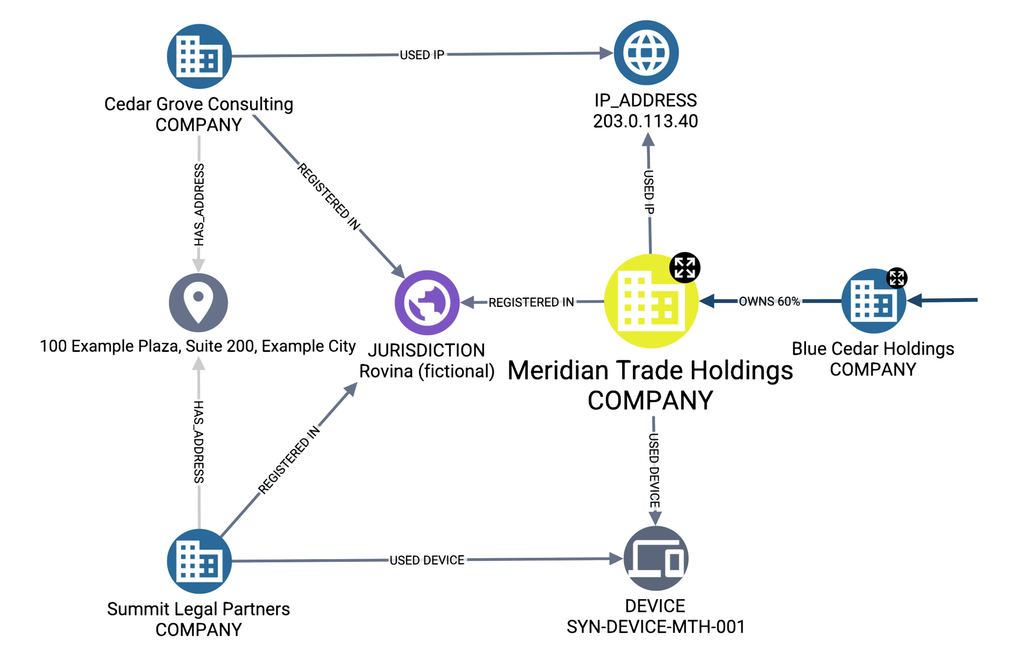
Records link Meridian and Summit Legal Partners to the same device, and Meridian and Cedar Grove Consulting to the same IP address. Cedar Grove and Summit also have the same corporate-services address.
These connections give the analyst specific questions to investigate, including whether the shared infrastructure has a legitimate explanation.
The case recommends enhanced due diligence based on the ownership structure, qualifying-owner results, and reviewed sanctions evidence. The additional connections provide context for that investigation. Each observation stays linked to its source so another reviewer can see why it was raised.
What happens when ownership changes?
While the case remains under review, NorthStar receives a new declaration. In the demonstration, the workflow checks it against the configured NorthStar document format and creates a proposed ownership snapshot. It recalculates effective stakes and alerts the analyst when the set of qualifying owners changes. The accepted ownership record remains in place while the proposal is reviewed.
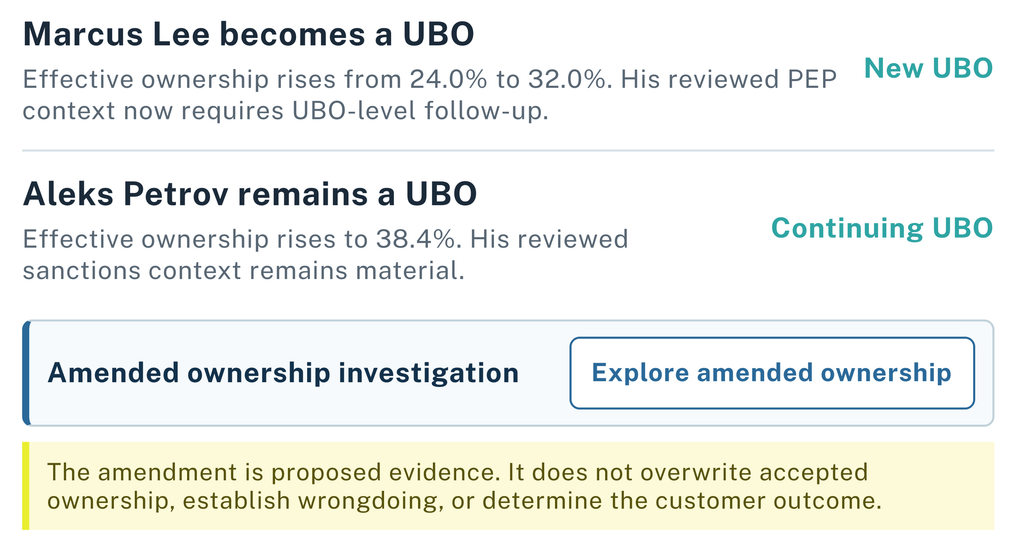
In the proposal, Elena’s stake falls from 40% to 20%, while Marcus’s rises from 24% to 32%. Aleks’s rises from 28.8% to 38.4%. Under the demonstration’s threshold, Marcus replaces Elena in the qualifying set. Elena remains an owner, but her proposed stake no longer meets the threshold.
The qualifying-owner count stayed at two. The people changed.
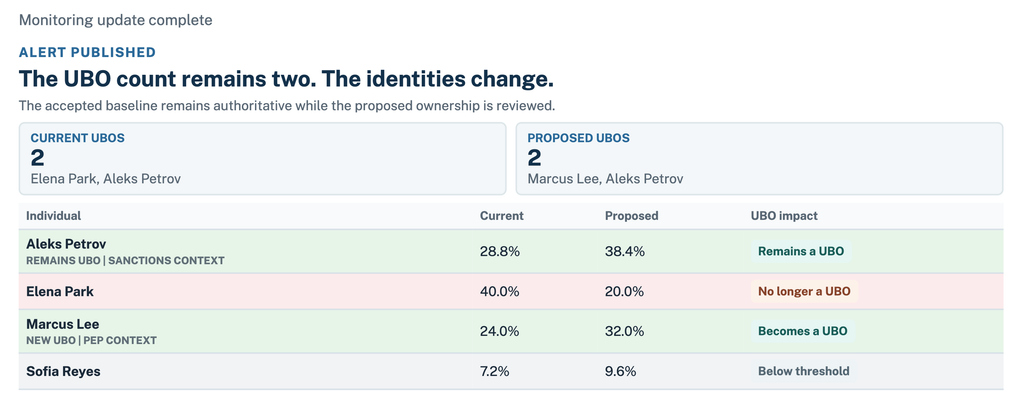
Marcus’s existing PEP evidence now needs to be reviewed in light of his proposed qualifying stake. Aleks’s reviewed sanctions evidence remains relevant as his proposed stake increases. The analyst can revisit both records while verifying the declaration and deciding what needs attention next.
Keep the response and evidence together
The analyst then records what needs to happen: verify the amendment and its source, review the changed owners and their screening records, and prepare the reasoning for the next reviewer. Saving captures the task states and rationale together as one revision. A separate action generates a review package containing that response and the evidence versions it relied on.
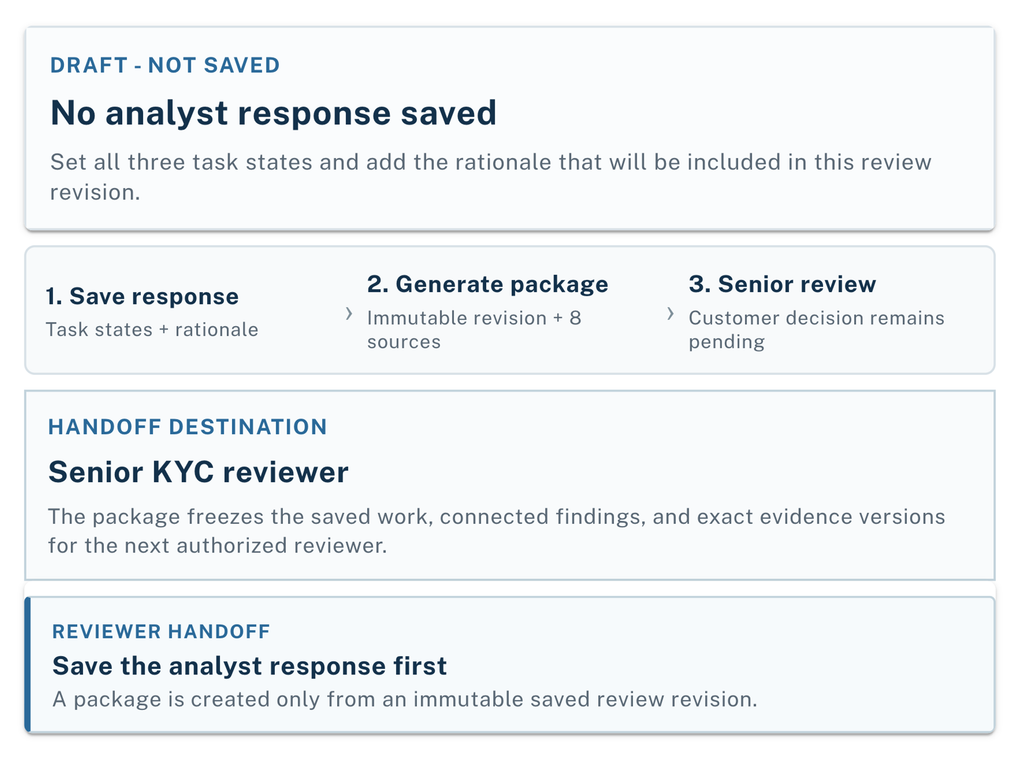
Once generated, the package brings ownership findings, supporting evidence, and analyst reasoning together for the next authorized reviewer. The application does not approve or reject Meridian. That decision remains with NorthStar’s authorized reviewers.
Start with one ownership review
Start with one representative onboarding journey using your sources, your policy, your screening evidence, and your reviewer handoff. Can your team explain who ultimately owns the customer and recognize when that answer changes? Can another reviewer follow the reasoning without rebuilding the case?
Use that case to assess how much work it takes to reconstruct ownership, the quality of the review record, and how new evidence reaches the right analyst. The production workflow and integrations would be designed around your institution’s formats and controls. Your authorized reviewers retain decision authority.
Next steps
Request a Corporate KYC demonstration built around your ownership policy, evidence sources, screening providers, and analyst workflow.
Share Article



Explore
Related Articles