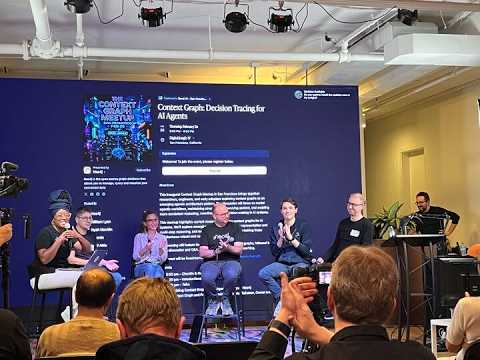
Context Graph and Process Knowledge, Jessica Talisman, Contextually LLC
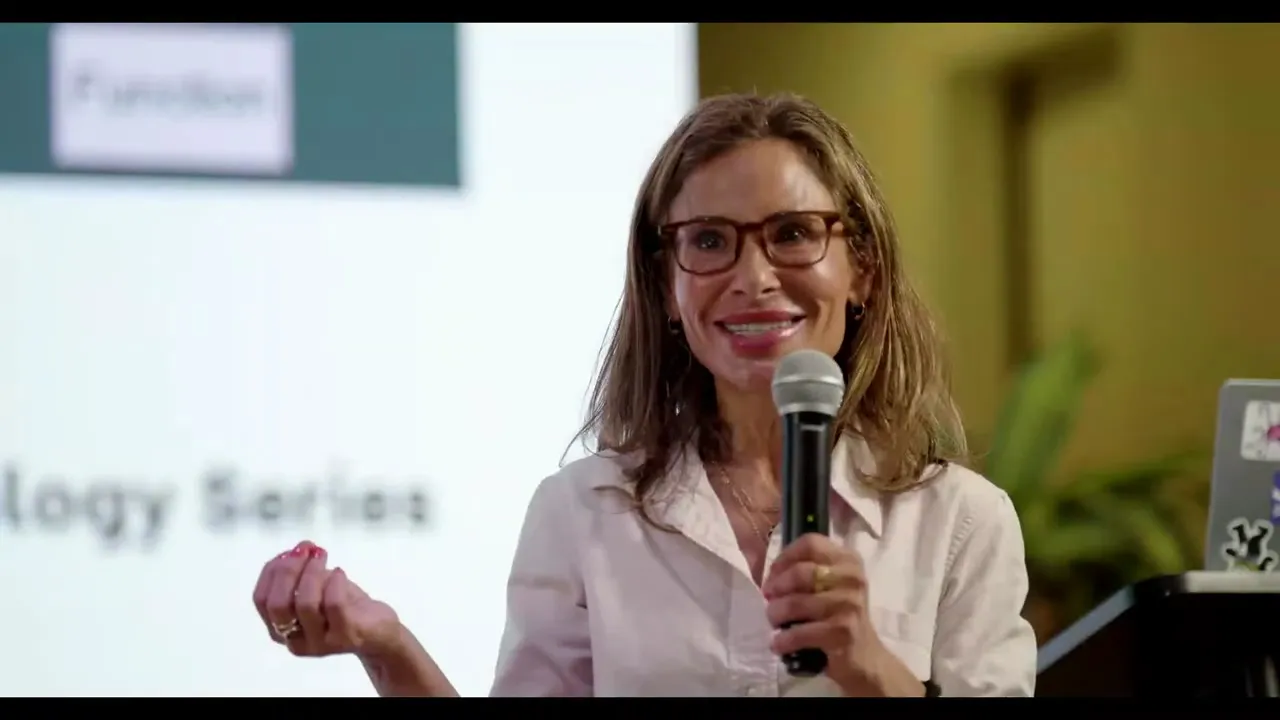 Play video on YouTube: Context Graph and Process Knowledge, Jessica Talisman, Contextually LLC
Up next
The Context Graph Panel with Will Lyon, Jessica Talisman, Dave Bennett, Yann Bilien and Emil Eifrem


Chapters 7
- Play from Introduction: Jessica Talisman on knowledge management and context graphs
- Play from The Foundation Capital thesis — what it got right and where it goes wrong
- Play from Why context graphs are a knowledge management problem, not a data problem
- Play from What is procedural knowledge and why must it come before data capture?
- Play from The Procedural Knowledge Ontology (PKO): lessons from Siemens and Bosch
- Play from Four steps every organization needs to take before building context graphs
- Play from Standing on the shoulders of giants: prior art in knowledge management
Jessica argues that the industry’s current obsession with "context graphs" and "decision traces" is a misdirection if treated as a purely technical or data engineering problem. While decision traces—logs of how an AI arrived at a conclusion—are valuable, they are essentially meaningless in isolation. The speaker asserts that the true challenge is a knowledge management problem, requiring a formal infrastructure to define the relationships, roles, and policies that give a decision its context. Without a pre-defined knowledge model (or ontology), capturing raw data is just "collecting streams" and hoping for insights that will never materialize.
To build resilient AI systems, the speaker advocates for a shift toward procedural knowledge, a discipline that transforms tacit human expertise into formal computational representations. This process involves four critical steps: acknowledging the human-centric nature of knowledge, investing in "elicitation infrastructure" to extract expertise from people's heads, building a formal knowledge model before the data persistence layer, and designing systems where knowledge capture is a primary objective. By standing on the "shoulders of giants" in existing procedural research, enterprises can move beyond simple operational logs to create systems that truly understand and manage the complex "negative space" between data points.
Would you like me to break down the "Procedural Knowledge Ontology" (PKO) layers mentioned in the talk, such as Strategic, Tactical, and Operational?
Information architect Jessica Talisman (Contextually LLC) argues that:
- Decision traces are meaningless in isolation — context requires a formal knowledge model built before any data layer
- The real gap in AI systems is not captured data, but understood data: structured with ontologies and procedural knowledge
- Tacit human expertise must be extracted and encoded before any AI system can reason over organizational decisions reliably
- Four practical steps any enterprise can take to build context graph infrastructure that actually works
- Watched Duration: 23:29
- Watched Duration: 30:26

- Watched Duration: 18:36

- Watched Duration: 15:29

- Watched Duration: 47:56

- Watched Duration: 20:47

- Watched Duration: 28:15