Knowledge Graphs Are the Accountability Layer for High-Stakes AI

Full Stack Developer
9 min read
In pharma, law, insurance, and defense, the AI systems that work all share one thing.
AI stopped being experimental a while ago
This isn’t speculation. These systems are live.
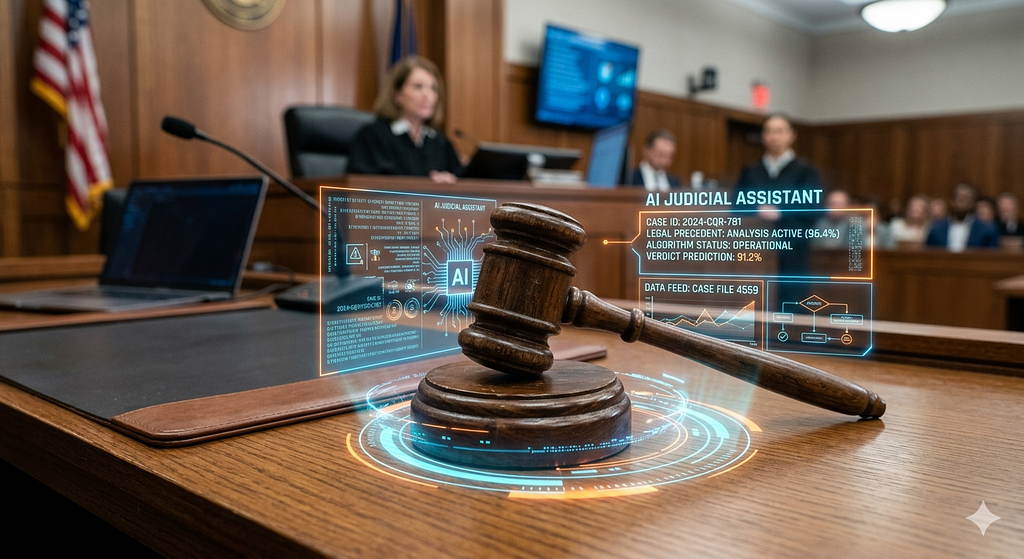
In Shanghai, every criminal case runs through System 206, an AI assistant that flags evidence gaps, checks sentencing consistency, and recommends severity. The backstory matters: after the Cultural Revolution, China had roughly 2,000 practicing lawyers for a population of a billion. That vacuum never fully closed. Caseloads exploded, judicial training stayed uneven, and the government reached for automation. Today, the Supreme People’s Court has mandated AI across all courts. Judges auto-generate over 70% of judgment drafts with one click.
Pharma went a different direction but ended up in the same place. AstraZeneca’s Biological Insights Knowledge Graph connects 10.9 million nodes and 118 million edges for drug discovery and target identification. They built it because modern biomedical data is scattered across dozens of databases, formats, and internal silos, and no human team can hold it all in their head. Merck’s Synaptix solves a similar problem: their R&D data was fragmented across pre-clinical, clinical, and regulatory systems, so they built a graph to make those connections explicit. Both run on Neo4j.
Zurich Insurance uses a 20-million-node graph to catch fraud rings. Before that? Their rule-based system drowned investigators in disconnected alerts and false positives. Mapping the actual relationships between claimants, accounts, and policies as a graph cuts through the noise. 50,000 hours saved per year.
And then there’s defense. Israel’s Lavender system scored every one of Gaza’s 2.3 million residents on a 1–100 scale of militant affiliation. It cross-referenced phone metadata, WhatsApp groups, social connections, and movement patterns. The goal was to process intelligence at a speed no analyst team could match. The architecture is functionally a social network graph — entity linking, relationship traversal, proximity scoring. The controversy around false positives and automated targeting in warfare is intense, and for good reason.
These aren’t research demos. They’re production systems making calls about freedom, health, money, and lives.
The ones that fail have one thing in common
They can’t show their work.
486 court cases globally now involve AI-hallucinated content. 324 in the US alone — 128 lawyers implicated, two judges. A Los Angeles attorney got fined after 21 of 23 quotes in an appellate brief turned out to be invented by ChatGPT. A BC lawyer had to pay the other side’s costs for citing a precedent that doesn’t exist. LLMs don’t hedge when they hallucinate. They deliver invented case law in the exact same tone as real citations — no uncertainty, no disclaimers. Just wrong answers dressed up as right ones. These aren’t edge cases anymore. There’s a database tracking them.
Australia’s Robodebt program auto-generated welfare debt notices for hundreds of thousands of people based on flawed income averaging. Many debts were simply wrong. People lost homes. Some took their lives.
The Dutch government collapsed in 2021 after it came out that an algorithm had flagged around 26,000 parents as childcare benefits cheats, disproportionately targeting people with non-Dutch last names. Amnesty International called the systems “xenophobic machines.” That’s not hyperbole. The algorithm literally used nationality as a scoring variable.
Every one of these failures follows the same arc. An AI system makes a consequential decision. Nobody can reconstruct how. The damage compounds until someone finally asks the question that should have been asked on day one: where did this answer come from?
Where knowledge graphs already solve this
The organizations getting high-stakes AI right didn’t all read the same whitepaper. But they converged on the same architecture: ground the AI in a knowledge graph. Not because it’s fashionable, but because every relationship in a graph is explicit, traceable, and queryable.
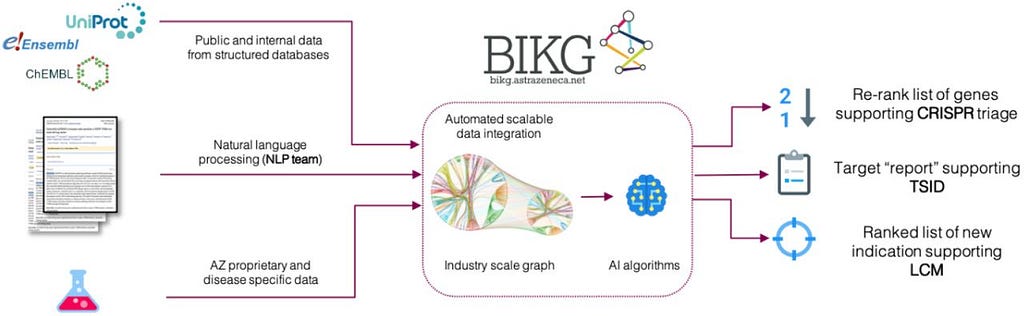
AstraZeneca’s BIKG is 10.9 million nodes, 22 node types, 118 million edges, running on Neo4j. It pulls from ChEMBL, Ensembl, NLP-extracted literature, and proprietary lab results. When the system flags a potential drug target, you don’t get a probability score and a shrug. You get: this compound targets this gene, which is linked to this disease, supported by these papers and this experiment. That chain isn’t a feature. In drug discovery, it’s what regulators require.
(Source)
Merck’s Synaptix connects pre-clinical through regulatory on Neo4j. Drug repurposing, competitive intelligence, GenAI workflows are all grounded in graph relationships instead of vector similarity and hope.
(Source)
Zurich Insurance is 20 million nodes, 35 million relationships, Neo4j plus Linkurious for visualization. They catch fraud rings by walking the graph: the claimant filed here, shares an address with this person, who has three claims through a different provider, all routed to the same bank account. An investigator asking “why was this flagged?” gets a visible path, not a number. Triage time down 30%.
(Source)
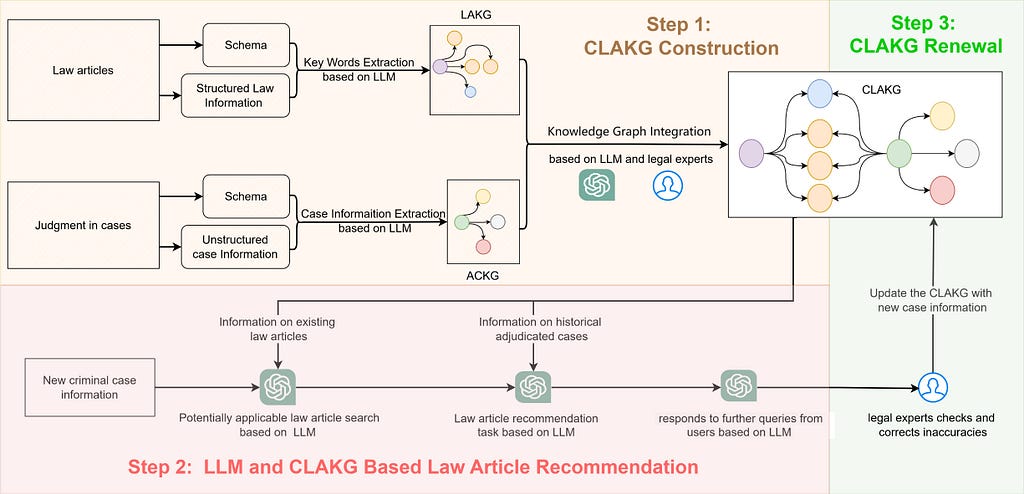
CLAKG. Chinese researchers built the Case-Enhanced Law Article Knowledge Graph. They plugged a knowledge graph into an LLM for criminal law article recommendation and pushed accuracy up 26% versus vanilla RAG. The graph maps case elements to legal provisions to precedent. Every recommendation has a paper trail.
(Source)
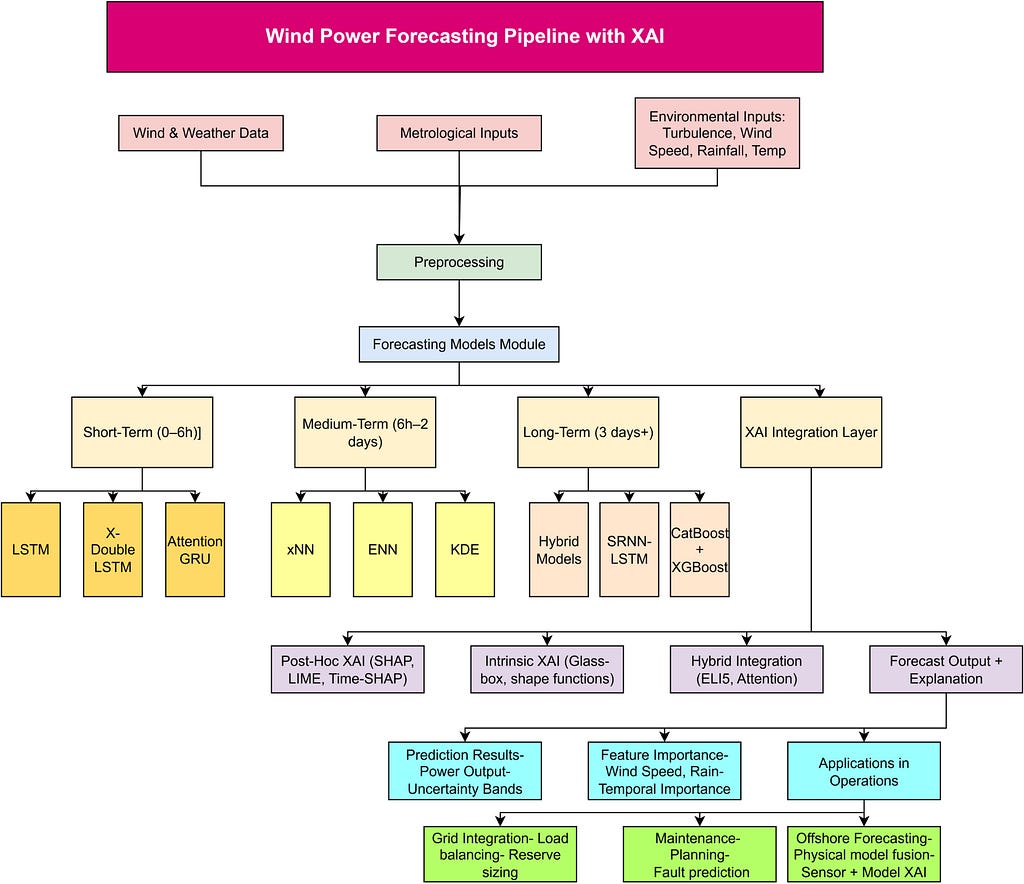
XAI4Wind is a multimodal knowledge graph on Neo4j for wind turbine maintenance. SCADA data, alarm logs, technician reports, and photos — all in one graph. When the AI says “replace this bearing,” the graph shows which sensor readings, which alarms, and which past repair notes back that call. Explainable AI that’s actually explainable.
(Source)
What graph-grounded AI looks like in practice
Standard RAG retrieves text chunks by vector similarity and hands them to an LLM. You get an answer. Maybe you get a source list. The link between the two is vibes where the model thought these chunks seemed relevant. Good luck explaining that to an auditor.
Graph-backed RAG is different. The path from question to answer is a thing you can query:
MATCH (answer:AIResponse)-[:GROUNDED_BY]->(fact:Fact)
      -[:EXTRACTED_FROM]->(doc:Document)
WHERE answer.id = $responseId
RETURN fact.statement, doc.title, doc.url, fact.confidence
Every fact is a node. Every citation is an edge. The reasoning isn’t hidden in attention weights, but it’s a database query you can run, inspect, and argue with.
I realize this sounds aggressively boring next to autonomous agents writing their own code. That’s the point. Boring is a feature when a wrong answer means a drug goes to trial on bad evidence or a fraud claim ruins someone’s year.
On schema-bound queries for KPIs, forecasts, compliance checks, the stuff regulated industries actually care about, vector-only RAG benchmarks at 0% accuracy in some tests. GraphRAG: over 90%. Not a marginal improvement. A different category.
The regulators caught up
Four major frameworks dropped in the past 18 months. They all say the same thing in different fonts.
NIST AI 600–1 (July 2024) identified “confabulation” (their word for hallucination) as one of 12 core GenAI risks. They specifically call for grounding controls: source allow-lists, citation policies, and retrieval constraints. This is the US government saying “RAG isn’t optional.”
EU AI Act (high-risk obligations kick in August 2026) requires accuracy, transparency, documentation, and human oversight for high-risk AI. Pharma AI is explicitly classified as high-risk. If your LLM can’t prove where its answers came from, it’s non-compliant. Not in a hand-wavy way. In a “you can’t deploy this” way.
FDA + EMA (January 2026) jointly published 10 principles for AI in the medicines lifecycle. Interpretability, explainability, robustness are all required. First time the two biggest drug regulators on the planet issued a joint position on AI. That’s not a suggestion.
APRA (April 2026). Australia’s prudential regulator published its first AI-specific expectations. AI inventory of all tools, lifecycle accountability, human-in-the-loop for high-risk decisions, board members who actually understand AI. And under Australia’s Financial Accountability Regime, executives are personally liable for AI-related outcomes. Personally.
These aren’t thought leadership pieces. They have compliance dates.
The part nobody wants to talk about
The most reliable AI architectures are also the least exciting ones.
They don’t improvise. They don’t generate insights from nothing. They look things up in a curated knowledge base and hand you the receipts. Anyone who’s built a search engine will recognize this immediately. It’s retrieval with better data structures. If that deflates the magic a bit, good. Magic is not what you want in a system approving cancer drugs.
AstraZeneca, Zurich, the CLAKG researchers — they all made the same bet. Trade some generative flexibility for full traceability. Pick “I can show you exactly why” over “I’m 94% confident.”
Knowledge graphs are what makes that trade-off work. Not the only piece, but the layer that turns “the AI said so” into a graph you can walk from question to evidence, edge by edge. If your industry is regulated, or if a wrong answer has worse consequences than a thumbs-down button, this isn’t an architecture preference. It’s load-bearing infrastructure.
Resources
- AstraZeneca BIKG — bioRxiv
- Merck Synaptix — Neo4j GraphTalk Pharma 2025
- SPOKE biomedical KG — PMC
- Zurich Insurance fraud detection — Neo4j
- CLAKG: KG + LLM for Chinese law — arXiv
- XAI4Wind multimodal KG — arXiv
- NIST AI 600–1 GenAI risk profile
- EU AI Act
- FDA + EMA joint AI principles
- APRA letter on AI
- AI hallucination court cases — Damien Charlotin
- Lavender investigation — +972 Magazine
- Dutch childcare scandal — Amnesty International
- China’s 1980 Legal Profession Statistics — Case Western Reserve Journal of International Law
Knowledge Graphs Are the Accountability Layer for High-Stakes AI was originally published in Neo4j Developer Blog on Medium, where people are continuing the conversation by highlighting and responding to this story.
Share Article



Explore
Related Articles



SumoDB in Neo4j: Chaining Multiple Graph Algorithms in Snowflake — Part 3