
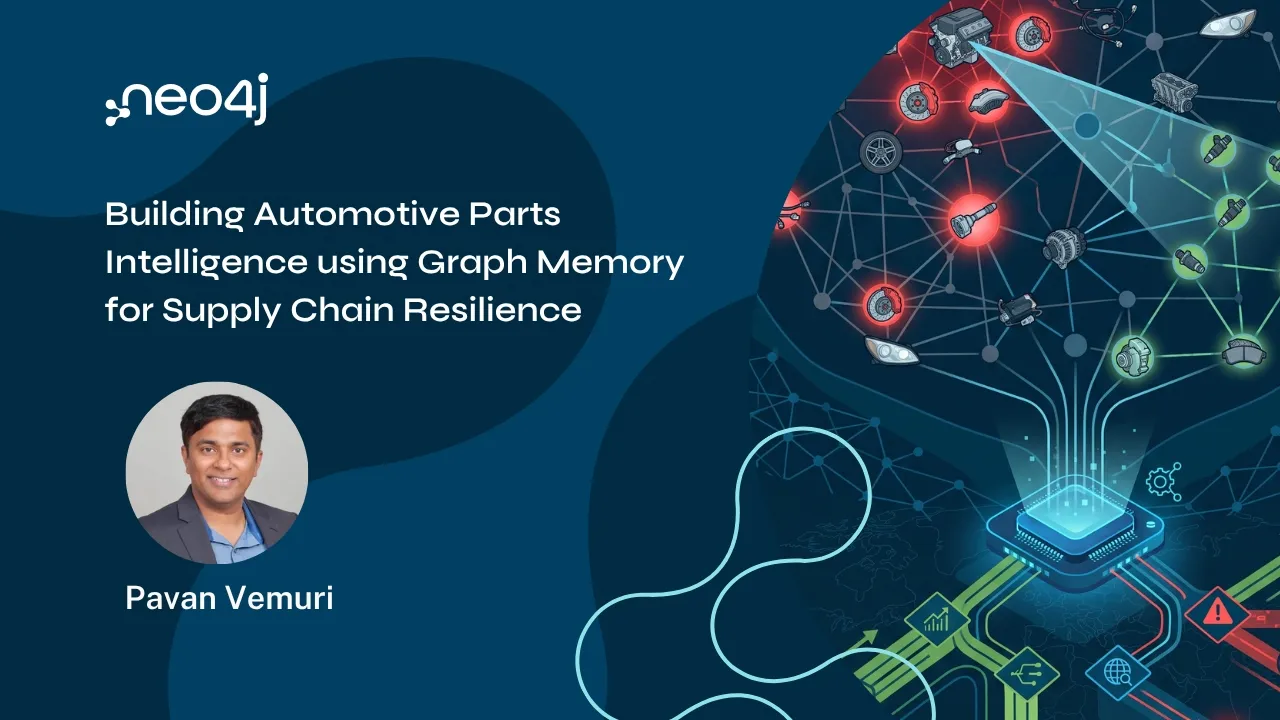
Building Automotive Parts Intelligence using Graph Memory for Supply Chain Resilience
 Play video on YouTube: Building Automotive Parts Intelligence using Graph Memory for Supply Chain Resilience
Up next

AIRBUS: See what others miss: Revealing hidden risks in Airbus’ supply chain with Graph intelligence


Chapters 9
- Play from Introduction & Guest Welcome
- Play from The Problem: Automotive Supply Chain Disruptions
- Play from Two Types of Reasoning: Similarity & Relationships
- Play from Where Vector Search Excels & Where It Hits a Ceiling
- Play from How the Knowledge Graph Fills the Gaps
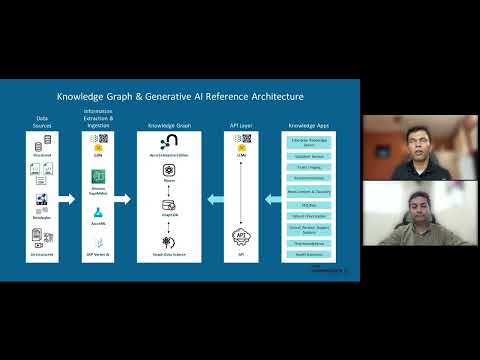
- Play from Architecture Overview: Qdrant + Neo4j + Agentic Workflow
- Play from Live Demo: Natural Language Search & Graph Insights
- Play from Exploring the Neo4j Knowledge Graph Model
- Play from MCP Server Demo
Fixing automotive supply chain risk with graphs, vectors, and agents
A chip shortage hits and one part goes dark. Vector search finds parts that look alike. It can't tell you which vehicles are affected, whether a substitute clears compliance, or where supplier concentration creates risk.
In this stream, we build a dual-store architecture - Neo4j for graph reasoning, Qdrant for semantic search - orchestrated by a LangGraph agent that runs impact analysis, validates alternatives against compliance and BOM constraints, and flags supplier risk, end to end.
If you build with graphs, vectors, or agentic pipelines, come see how they hold up under pressure.
Guest: Pavan Vemuri ( linkedin.com/in/pavan-vemuri-77419723 (opens in a new tab) )
@qdrant
Resources mentioned
- Watched Duration: 2:08:49

- Watched Duration: 20:35

- Watched Duration: 21:27
- Watched Duration: 36:08

- Watched Duration: 1:05

- Watched Duration: 1:04:55

- Watched Duration: 3:30

